Op FiringSquad lezen we dat Epic een softwarematige renderer voor Unreal Tournament 2003 heeft uitgebracht. Epic heeft Pixomatic van RAD Game Tools gebruikt als renderer. Michael Abrash en Mike Sertain hebben dit programma geschreven. Abrash is onder andere bekend van zijn boeken en natuurlijk zijn bijdrage aan het spel Quake. Pixomatic is bedoeld om een breed publiek aan het gamen te krijgen. Langzame of ontbrekende 3D-kaarten mogen volgens Epic geen belemmering zijn voor gamers. Het programma biedt MIP mapping, bi-linear filtering, alpha-blending, alpha-test, point sprites, multi-texture en een scala aan andere features. Pixomatic produceert on-the-fly MMX-, 3DNow!- en SSE-code op een acceptabele snelheid. De reacties op het forum van FiringSquad zijn verdeeld maar redelijk positief:
Just given it a shot, not bad actually certainly not as bad as I thought it would be. You certainly need a very fast CPU. On my 2.5GHz P4 @ 800x600 it was barely playable, and at 320x240, although the frame rate was smooth, it looked like a GameBoy Advance game blown up on a large TV.
[...] This would be a good idea for laptop owners with poor 3D cards (read no 3D cards), or for office PC owners for the same reasons. It would certain help people like me who works in a game shop and have to put up with people bringing these games back coz their graphics card isn't fast enough, don't have the right drivers etc.

 SCO isn't even telling what they have, and I'm not a lawyer anyway. The people I've spoken to seem to think the merit of the case lies in whatever details, and since SCO hasn't disclosed any of those details, they can't say.
 In tandem with tool enhancements, Sun's Green said that over the next six to 12 months, Sun and other Java companies will be adding improvements to the Java specifications that will speed up development.
  Reuters
 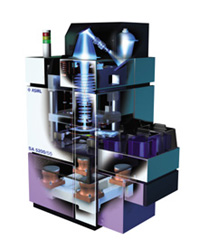 In its new roadmap, which was disclosed today (May 22), Intel plans to deploy 193-nm scanners for three nodes: 90-, 65-, and 45-nm. The primary candidate for the 32-nm node, which is slated for 2009, is EUV, Silverman. �Intel will continue to monitor other potential lithography technologies,� he said.
  The NVIDIA Quadro FX 500, available immediately, is armed with a high-end architecture featuring the industry’s only true 128-bit floating-point frame buffer, industry-leading 12 bits of subpixel precision, parallelized vertex engines, the industry’s first on-chip vertex cache, and fully programmable pixel pipelines allowing developers to simulate a virtually unlimited range of real-world properties like metal or skin and to modify them on the fly.
:fill(white):strip_exif()/i/2000783030.jpeg?f=thumbmedium)
 Onder de critici bevond zich ook het Duitse
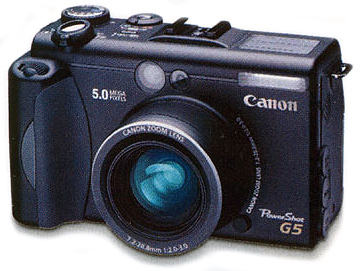
 De 5M pixel CCD (RGB filter) zorgt voor een opvallend performante detailweergave en de DIGIC Processor staat borg voor superieure kleurenreproductie
  .
.
:strip_exif()/i/998248528.jpg?f=thumbmedium)
 Registratie van domeinnamen zal voorbehouden zijn aan agenten ('registrars'), waarmee gehoopt wordt concurrentie te bevorderen. Het zal nog enige tijd duren voordat .eu-domein in volledige operationeel is: nadat alle administratieve rompslomp is afgerond, duurt het naar verwachting nog een half jaar tot EURid kan starten. In het eerste jaar daarna verwacht het consortium zo'n miljoen domeinen te mogen registreren:
:strip_exif()/i/1298899109.gif?f=fpa)
 Ronald Scelson, owner of Scelson Online Marketing, a Louisiana-based company that sends up to 180 million commercial e-mails each day, said he welcomes a national law as long as law-abiding companies aren't hurt by it.
  Microsoft is nog steeds de derde speler op de markt, maar analisten voorspellen dat IBM en Oracle - traditioneel de twee grootste database-ontwikkelaars - moeten oppassen voor hun marktaandeel. De producten van Microsoft zijn ook geschikt voor het midden- en kleinbedrijf, terwijl Oracle een zwaarder systeem en meer kennis vergt. Oracle is nog wel marktleider als het gaat om Unix-systemen:
 Record labels suffered a setback in April when a federal judge ruled that song-swap networks Grokster and Morpheus should not be shut because they do not control what is traded on them. Kazaa, which is involved in a separate lawsuit with the recording industry, also distributes licensed files.
 "I want to make sure that a tape that I have made will work on any modern version of Windows," Bergin said. (...) Bergin originally told Microsoft about the glitch a month ago, and although the company didn't see it as a problem then, they do now, he said.
 De ICH5 southbridge biedt de mogelijkheid om Serial ATA te gebruiken. Dit laatste betekent niet per se extra snelheid, maar de SATA-kabels zorgen in vergelijking met normale flatcables wel voor een verbeterde airflow in de krappe behuizing. Op het moederbord is tevens een geluidschip te vinden, evenals een netwerkaansluiting en onboard video in de vorm van de Intel Extreme Graphics 2. Verder beschikt de SB61G2 over een AGP8x-slot, een PCI-slot, een stapel aansluitingen waaronder USB 2.0 en FireWire. De kast beschikt over één 5,25" bay alsmede twee 3,5" plaatsen, waarvan één intern. Opvallend genoeg beschikt het nieuwe product niet over een tv-out.

 "Even though products have started rolling onto the market in the first half of this year, I think that [interoperability] questions still existed in some people's minds," said Matthew Shoemake, the chair of the IEEE 802.11g Task Group. "Hopefully now ... some of those questions can go away, and this upgrade to 802.11 can take hold in the market."
 :strip_exif()/i/1070382111.gif?f=fpa)
