FiringSquad heeft op Comdex 2002 bij ATi het een en ander los weten te peuteren over de opvolger van de Radeon 9700 Pro, met de codenaamd R350: de nieuwe GPU zal waarschijnlijk als Radeon 9900 door het leven gaan. Deze chip is ATi's antwoord op de GeForceFX van nVidia. De Radeon 9900 heeft alles aan boord om de GeForceFX te verslaan. Zo gaat deze op een hogere kloksnelheid draaien dan nVidia's wapen in de strijd om de performancebeker. Met kloksnelheden van boven de 500MHz, efficiënte pipelines, ondersteuning voor DDRII-geheugen en HyperZ III-technologie zou de Radeon 9900 zelfs in de nieuwste DirectX 9.1-games voor hoge framerates gaan zorgen. De Radeon 9900 wordt verwacht in februari:
Finally, it will be interesting to see what ATI is up to come February. Word on the street is that ATI's follow-up to RADEON 9700 PRO (codenamed R350) has taped out recently and will be marketed under the name RADEON 9900. We've heard conflicting reports on its manufacturing process, we naturally assumed it would be a 0.13-micron part, but we've also been informed by another source that the design is 0.15-micron.
:fill(white):strip_exif()/i/1237811363.jpeg?f=thumbmedium)

:fill(white):strip_exif()/i/1237812984.jpeg?f=thumbmedium)
:fill(white):strip_exif()/i/1237810345.jpeg?f=thumbmedium)
:fill(white):strip_exif()/i/1237811650.jpeg?f=thumbmedium)
 "So, are Sun, Corel, and the others looking to take market share away from Microsoft? Of course. Is Microsoft worried? Very little, if at all. After all, if Microsoft's customers demanded they support this new OASIS standard, then Microsoft would have no trouble doing so. So as usual, Microsoft is holding all the cards."
 Chipset designers VIA Technologies, Silicon Integrated Systems (SiS) and ALi Corporation (formerly Acer Laboratories) are all adopting the more traditional north/south-bridge or graphics-incorporated architectures in their K8-supporting products.
/i/1252248995.png?f=fpa)
/i/1269936425.png?f=fpa)
:strip_exif()/i/1203362676.gif?f=fpa)
/i/1206009202.png?f=fpa)
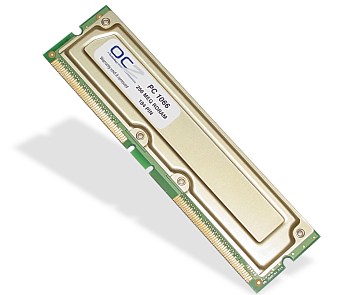
 Why risk introducing the Hammer while memory marchitecture is in such a state of flux? There is no good reason. Rumours are flying that the VIA KT400A will use dual channel DDR400, a sensible move to keep up with Intel who are moving to dual channel systems themselves. A Hammer with single channel DDR might well perform quite badly in comparison.
 "We were intrigued by the difficult computing science research involved in creating network capabilities that would provide the same level of accountability in cyberspace that we now have in the physical world," DARPA spokeswoman Jan Walker said in a telephone interview.
 Verdere support kwam er op de SC2002 supercomputerbeurs in Baltimore, waar enkele bedrijven InfiniBandproducten aankondigden. Indien InfiniBand daadwerkelijk als clustertechnologie voor supercomputers zal worden gebruikt, krijgt het te maken met concurrenten zoals Myricom en Quadrics, die in feite hardware verkopen met precies dezelfde werking. Volgens expert Gordon Haff van Illuminata is er sowieso sprake van een zeer groot aanbod van producten in de marktsector waar InfiniBand zich nu naar verplaatst. Wat opvalt is dat IBM weer bezig is gegaan met de InfiniBandtechnologie: het bedrijf is nu tests aan het voeren met InfiniBandclusters als een optie voor high-performance computing.
:strip_exif()/i/1037647899.gif?f=fpa)
 This is my own interpretation, but this seems to indicate that Intel will push a new DDR400 JEDEC standard. Intel could specify shorter stubs and FBGA (instead of TSOP) chips to make DDR400 work. This is speculation of my part of course, but it will be interesting to see what Intel will change to the DDR333 spec. I think it safe to say that the current DDR400 modules do not qualify for Intel's Dual DDR plans next year. To be continued...
:strip_exif()/i/1034312833.gif?f=fpa)
 These screenshots are very preliminary and must not - by any means - be considered as the definitive appearance of the AmigaOS 4.0 GUI. Work is still in progress, and a lot of improvements are being added, including the user's ability to configure almost everything.
/i/1276264274.png?f=fpa)
:strip_exif()/i/1256021797.gif?f=fpa)
 Enige dagen geleden kwam oppositiepartij GroenLinks in het
 :strip_exif()/i/1290158845.jpeg?f=fpa)
:strip_exif()/i/1037180778.jpg?f=fpa)
:strip_exif()/i/1032192616.jpg?f=fpa)
