CNet.com bericht dat Verisign deze week één van de dertien DNS rootservers heeft verplaatst vanwege veiligheidsredenen. De verplaatsing komt slechts enkele weken nadat hackers een grote DDOS-aanval uitvoerden op de servers. Volgens Verisign heeft die gebeurtenis echter geen rol gespeeld in het besluit om de server te verplaatsen. Het verplaatsen van de server was onderdeel van een al langer lopend programma om de veiligheidsrisico's te beperken. De server, bekend als de J root server, is verplaatst naar een onbekende locatie. Voorheen stond de server in hetzelfde gebouw als de A root server. Het blijkt trouwens dat de recente aanval bij lange na niet zo serieus was als aanvankelijk werd gedacht. Om de DDOS-aanval te stoppen werden ICMP-packets tegengehouden waardoor er ten onrechte van uit werd gedaan dat de servers down waren:
Originally, Matrix NetSystems, a company that measures network performance, had reported that both of Verisign's root servers had been severely affected by the attacks. Later, though, the company recanted its claims, explaining that its method of measuring server uptime used Internet Control and Management Protocol (ICMP) packets, the same sort of data the attackers had used to flood the DNS root servers. Verisign pointed out that it had filtered out such data, a move that stopped the attack but that had also made it appear to Matrix NetSystems that the servers were down.
Other servers that were thought to have been downed by the attack may also have been operating reliably, Matrix NetSystems explained on its Web site.
"Other DNS root-server operators, such as the Department of Defense, which operates the G server, also took steps to maintain reliable connections," the company said in its latest advisory, dated Oct. 23. "According to DOD sources, they immediately began rate-limiting requests and switched to stealth servers to thwart the attack."
:strip_exif()/i/1265625822.gif?f=fpa)

 Het Hof beperkt zich tot de vaststelling dat de grieven van XS4ALL in dit specifieke geval falen en geeft alleen aan dat een provider nadere informatie mag vragen aan klager en klant '(...) bijvoorbeeld bij informatie die beweerdelijk beledigend is of die beweerdelijk inbreuk maakt op een auteursrecht (...).' XS4ALL maakt zich zorgen over de mogelijke impact van deze uitspraak op de kwaliteit van de afweging die providers dagelijks enige malen moeten maken. Kennelijk volstaat in sommige specifieke gevallen een simpele kennisgeving van een advocaat om onwelgevallig materiaal te laten verwijderen. Maar zonder duidelijke leidraad blijft het onduidelijk in welke gevallen materiaal onmiskenbaar onrechtmatig is.
 "Software upgrades can be delivered easily using the internet," says Halderman, "and this will permanently undermine the usefulness of audio CD copy prevention." To ban upgrades, he argues, would lead to "buggy software and poor hardware."
/i/1036685842.gif?f=imagegallery)
/i/1036686067.gif?f=imagegallery)
/i/1025168487.gif?f=imagegallery)
 De belangrijkste eis is waarschijnlijk dat de licentie geen verplichtingen bevat om royalties of andere gelden te vragen voor het programma. Tevens mag er geen restrictie zijn aan de personen of organisaties aan wie er geleverd wordt: zo mogen commerciële bedrijven niet uitgesloten worden van het gebruik van de software. De licentie moet tevens het beschikbaar stellen van de broncode verplicht stellen en het mogelijk maken dat anderen de code wijzigen en zelf opnieuw uitbrengen, zonder dat daar voor de persoon die wil wijzigen restricties aan verbonden zijn.
 iBook
iBook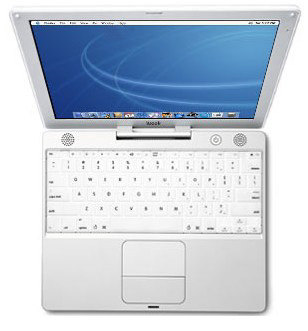
 De Nederlandse Consumentenbond noemt het gebrek aan betrouwbaarheid altijd al een van de grootste problemen van internet. Om die reden heeft de Consumentenbond in het verleden ook meegewerkt aan het instellen van het keurmerk Thuiswinkel.org, een garantie voor betrouwbare informatie en betrouwbaar kopen op internetten.
 :
: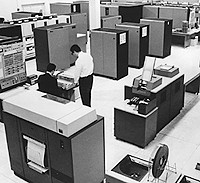 The term mainframe was originally coined to refer to the very large computer systems that occupied very large steel framed boxes, and was used to differentiate them from the smaller mini- or micro-computers. While the term has been used in various ways over the years, it is most often used to describe the successive families of IBM computer systems starting with System/360. This would also apply to compatible systems built by other companies such as Amdahl and Hitachi Data Systems (HDS).
 In 2005 wil het ministerie van Informatie en Communicatie alle inwoners hebben voorzien van een breedbandvoorziening. Volgens het ministerie zou dat minimaal met 1Mbit/s moeten gaan. Tevens zouden dan 13,5 miljoen inwoners een verbinding van 20Mbit/s tot hun beschikking moeten hebben. De Zuidkoreaanse regering stelt in totaal 211 miljoen euro beschikbaar middels leningen. Breedband is een opstap bij het streven om Zuid-Korea als kenniseconomie te handhaven, aldus president Kim Dea-Jung.
 Both Microsoft Corp. (NasdaqNM:MSFT - News) and Intel Corp. (NasdaqNM:INTC - News), which make the most popular combination of software and chips in personal computers, have recently introduced products aimed at the cell phone market -- indicating cell phones will likely become more like PCs. Dell, which has a strategy in which it moves into new markets based on standard designs such as the "Wintel" combination of Microsoft Windows and Intel chips, will begin selling handheld computers beginning on Nov. 18.
 C|Net meldt in hetzelfde
  Based on the statistics, ATI seemed to be hit harder by Intel than Nvidia. However, AMI Technologies, ATI's agent in Taiwan, said that the company's market share is expected to climb in the fourth quarter, as shipments of its R300 and RV250 chips for orders from Dell Computer and Legend begin.
 De wereldmarkt voor mobiele telefoons is een van de weinige lichtpuntjes in de chipmarkt, wat een gevolg is van de vervangingsverkopen in de overgang naar de volgende generatie mobiele telefonie. Volgens Dataquest is er ook een vervangingsronde voor zakelijke pc’s ophanden. Een herstel over een breed front in de productie van elektronische apparatuur begint waarschijnlijk niet voor het begin van 2004. Het jaar 2003 wordt naar verwachting een overgangsjaar.
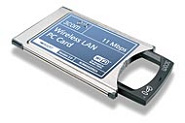 Na enkele rondjes over de grachten stuit Radar op een computer van een medewerker van KPN. Ook deze pc staat open voor het wijde publiek. De gehele inhoud van de computer is gemakkelijk te bekijken en ook hier roepen ze de eigenaar, middels een briefje uit zijn eigen printer naar buiten. KPN verschuilt zich achter de reden dat de getroffen computer een demo-model was. De uitzending van vier november is in zijn geheel op de website van Tros Radar te bezichtigen. Ook worden er nog enkele
  From the recent interview with the Marketing Manager of Lite-On USA we already learned that Lite-On would come with a DVD recorder. Today the company has let us know and confirmed that it is planning to release a DVD recorder that supports both DVD+RW and DVD-RW, and according to the company hopefully at 4x, for less then 200 USD in the second quarter of 2003.
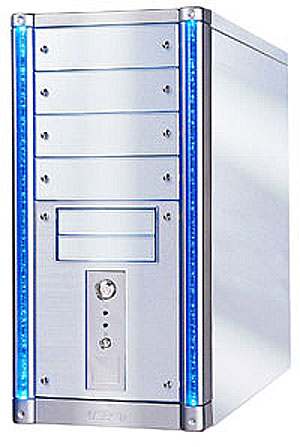
 Het artikel rept bovendien over de plannen van Intel om zich te gaan begeven op de markt voor computerkasten.
 /i/1031746080.jpg?f=imagegallery)
/i/1031746240.jpg?f=imagegallery)
 Announced last year, "pixie dust" is an IBM data storage breakthrough achieved by sandwiching a three-atom-thick layer of the element ruthenium, a precious metal similar to platinum, between two magnetic layers -- technically called antiferromagnetically-coupled media. That only a few atoms could have such a dramatic impact caused some IBM scientists to refer to the ruthenium layer informally as "pixie dust."
 I also have loads of questions about the product positioning for these new chips from the Santa Clara-based company. Presently NVIDIA’s partners sell the graphics cards powered by the GeForce4 Ti4600 with AGP 4x and the GeForce4 Ti4200 with AGP 8x and 128MB of memory for $299 and $199 respectively. According to the rumours, there will be two versions of NV30, one probably sold for $399 and another for either $299 or even lower – NVIDIA has a lot of competitors on the DirectX 9 field and they for sure do not want to lost their market share. Provided that there are NV30 powered graphics cards for $299, they will have to lower the prices for the GeForce4 Titanium based graphics solutions, say, to $199 for the 4800 model and even lower for the rest. Keeping in mind that this year NVIDIA will not be able to deliver their NV30 VPUs in volume quantities, it is logical for them to beat its competitors on the mainstream field with the prices, as they cannot offer any new features this year. I have no idea if ATI is be able to cut the costs on their RADEON 9700 and 9500 series of products, but I am sure that in this case they will not be able to achieve their planned gross margin on 35% this quarter.