Pat Gelsinger, hoofd van de afdeling research van Intel, heeft op de Agenda technologie conferentie van vorige week gewaarschuwd dat de Verenigde Staten hun leidende positie op het wereldwijde IT-vlak aan het kwijtraken zijn. Tijdens de conferentie hield hij een bewogen speech waarin met name de Amerikaanse mogelijkheid om te concurreren onderwerp was van zijn klaagzang. Volgens Gelsinger komen de VS meer en meer op het tweede plan en verliezen ze de slag van met name China en India, waar het nationaal IT-beleid wél een hoge prioriteit krijgt. Als voornaamste voorbeeld voor de teloorgang van de Amerikaanse IT-traditie noemt hij het feit dat er nu de helft minder wordt uitgegeven aan door de overheid betaalde R&D dan in de jaren '50 van de vorige eeuw.
Verdere bron van zorgen was het feit dat er in China jaarlijks 600.000 ingenieurs afstuderen, tegenover 70.000 in de Verenigde Staten. Ruim de helft van dat aantal is ook nog van buitenlandse afkomst en gaat na het behalen van de bul terug naar hun vaderland. Volgens Ray Bingham, CEO van Cadence Design Systems, moeten de VS zelf investeren, anders vindt het ontwerp van halfgeleiders in de toekomst in China plaats. Ook de auteur van het artikel op CNN schaart zich voorzichtig in het rijtje van mensen die zich zorgen maken:
So should we be worried? One could cynically argue that Intel, Microsoft, and Cadence talk this way because they would be among the big commercial beneficiaries of renewed government spending on technology. Regardless, it's apt that these executives are suddenly speaking out. Too little national attention is focused on the reality that technology is global, and that many, many countries see it as key to competitiveness. One thing that has changed since 1991 is the willingness of U.S. government to get involved. An increasingly tech-illiterate leadership in Washington has come to assume our long-robust private sector will keep us ahead. But if we were truly to fall behind in usage and development of IT, it would have deep consequences for jobs, economic performance, and our broader national standing as a global leader.

 WinBeta
  "These guys signed long-term deals that were not justified by any common sense or logic," Mehdi said. "The year-over-year comparisons for the industry look bad because the top two players account for two-thirds of all the online ads dollars." In other words, MSN's tardiness in jumping on the dot-com boom may have been a blessing in disguise.
  IBM's pSeries servers typically run Unix, but for its Power blades, the company expects the Linux operating system to be more popular, he said.
  Volgens
  ATi
ATi  Deze herstructurering is tevens opgenomen in de kasboeken van het vierde fiscale kwartaal. Het bedrijf heeft de kosten van deze reorganisatie op tussen de 10 en 14 miljoen dollar begroot. In het vierde kwartaal van vorig jaar werden 247 mensen ontslagen, iets wat toen 12,1 miljoen dollar kostte. Eerder stelde Adobe haar
  Roadmap SiS-chipsets voor Intel Pentium 4 platform

 The information about the chipsets for the Pentium 4 platform looks pretty logically and does not make us to doubt about its probability. On the other hand, the information about K8 core-logic solutions appears to be strange � apparently, SiS will start to offer them this December, while the ClawHammer processors will appear on the market in the very end of the first quarter 2003 at the earliest. What is also rather interesting is the fact that SiS will start to provide its new SiS746-series of chipsets in the same timeframe. I believe that both SiS746FX and SiS746 are produced on the same fab, thus, we can consider them to be �pseudo-different�.
 Trying to replace Microsoft Outlook or Lotus Notes, IBM's e-mail suite, in companies with thousands of employees is not in the plan, Kapor said.
 Richard Brennan, executive vice-president for OrangeWorld and Brand, said: “With the SPV, we now are able to deliver a suite of advanced services well before the advent of third generation networks, including photo messaging, advanced messaging services, video streaming and access to high-quality information and content, even across the web. The SPV is a key component of bringing these services to life and making them easier for our customers to access. The SPV will help drive Orange toward its predicted data revenue target of 25% of total revenues by 2005.
 Google Inc has been sued by a search engine optimization company, which claims Google deliberately altered its ranking when it realized the SEO company was competing with it. Search King Inc, of Oklahoma City, wants an injunction and $75,000 damages for alleged loss of business. Search King launched a service in August that allowed companies to place "text ads" on pages that score highly from Google's PageRank ranking algorithm. The rationale behind such a service is that a link from a high-PR page increases one's own PR, and makes your site more visible to Google users.
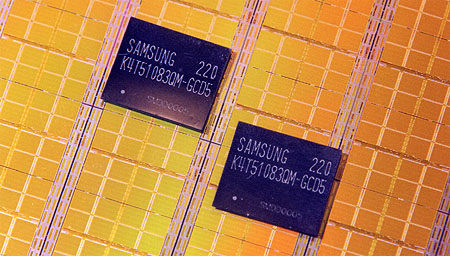
 Manufacturing with 300-mm wafers (about 12 inches in diameter) increases the production of computer chips at lower costs compared with the current standard 200-mm (eight inches) wafers. The total silicon surface area of a 300-mm wafer is 225 percent (or more than twice) that of a 200-mm wafer, and the ratio of the printed die (individual computer chips) is increased to 240 percent.
  After denial of service attacks temporarily crippled a handful of Web sites in early 2000, including Yahoo Inc. and eBay Inc., the attacker, whose alias was "Mafiaboy," was caught because he bragged about it in Instant Relay Chat channels used by hackers, experts said.