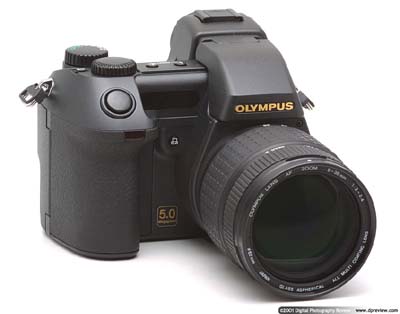
Bij DPreview hebben ze de Olympus E-20 digitale camera eens op de testbank gelegd voor een uitgebreide review. Deze semi-professionele 5 megapixel camera beschikt over een 4x zoom objectief en kan voor de opslag van foto's gebruik maken van SmartMedia en Compact Flash. Door middel van een knopje op de camera kan gewisseld worden tussen de twee verschillende opslagmedia. De grotendeels op de Olympus E-10 gebaseerde camera beschikt verder over een volledig spectrum van handmatige instellingen en wordt naast de standaard accessoires geleverd met een kleine afstandsbediening waarmee de zoom en de sluiter geregeld kunnen worden.
Bij de vergelijkende foto's ontbreekt vooralsnog één van de belangrijkste concurrenten. De Nikon Coolpix 5000 waarmee deze camera vergeleken had moeten worden was ten tijde van de review nog niet gearriveerd. De eindconclusie is overwegend positief, met als grootste nadelen het trage wegschrijven van foto's en de hoge prijs:
Take for instance one of the most frustrating issues when using the E-20; storage write times. The E-20's write speeds (SmartMedia or Compact Flash) are no better (and in some cases worse than) the Nikon Coolpix 995. The difference? The Coolpix 995 is a a sub-$900 prosumer camera which only needs to write 1 MB or sub-1 MB images, the E-20 is aimed at professionals with JPEG images (SHQ) which range between 3.5 and 2.5 MB.
Waiting 9, 11 or 15 seconds for these five megapixel images to be written to the storage card is no joke. Especially when you consider that the E-20 only has a 4 image buffer; that it does not allow you to change certain settings, enter the menu system, display an image or return the LCD to live view mode until it has finished writing the buffer contents. It's not clear if this problem is down to the speed of the E-20's "dual format" storage interface or the speed at which it's generating the final image as it's written out.
 |

 Other companies like Lite-On Technology and Behavior Tech Computer (BTC) have been cooperating with the Opto-Electronics & Systems Laboratories of Taiwan’s Industrial Technology Research Institute (ITRI) to develop multi-beam technology. However, with core technology from UK-based ZEN Research and DVD pick-up heads from Sanyo, Afreey claims to be ahead of the competition by one or two quarters.


 5)
5) 6)
6) )
)

/i/1237651632.png?f=fpa)
:strip_exif()/i/1004444089.jpg?f=thumbmedium)
:fill(white):strip_exif()/i/1288699462.jpeg?f=thumbmedium)
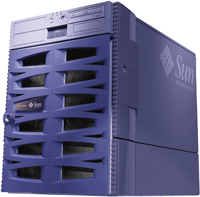 "We view the Wintel (Windows servers running on Intel chips) and Lintel (Linux-Intel) environment as ours to go get," said Neil Knox, general manager of Sun's volume systems group. "Buy a few V880s and kick out a boatload of Wintel servers," he said, reiterating the company's position that a Sun server can be used to replace several lesser machines, lowering management costs for customers.
 UPC heeft vandaag bekend gemaakt dat het aantal Chello-abonnees is gestegen tot een half miljoen, waarvan 200.000 in Nederland. Van de 500.000 abonnees kwam de helft er in de laatste 12 maanden bij. Chello begon in maart 1999 met het aanbieden van kabelinternet. Per week noteert de provider zo'n 6.000 nieuwe aansluitingen. Behalve in Nederland is Chello actief in Oostenrijk, Duitsland, Noorwegen, België, Frankrijk, Polen en Hongarije.
:strip_exif()/i/998311539.jpg?f=thumbmedium)
:strip_exif()/i/987929778.jpg?f=thumbmedium)
:strip_exif()/i/991386589.jpg?f=thumbmedium)
:strip_exif()/i/1003212030.jpg?f=thumbmedium)


 Een rondgang van
  Maxtor heeft
 :fill(white):strip_exif()/i/2000805132.jpeg?f=thumbmedium)
 In the next-generation memory market, meanwhile, Cisco's decision to go with FCRAMs and RLDRAMs are a major boost for Fujitsu, Infineon, and Toshiba.
Cisco--one of the world's largest consumers of chips--has little or no choice but to move to new memory technologies. In the past, networking-equipment OEMs used SDRAMs, SRAMs and other standard products in their systems.
In the next-generation memory market, meanwhile, Cisco's decision to go with FCRAMs and RLDRAMs are a major boost for Fujitsu, Infineon, and Toshiba.
Cisco--one of the world's largest consumers of chips--has little or no choice but to move to new memory technologies. In the past, networking-equipment OEMs used SDRAMs, SRAMs and other standard products in their systems.
 Intel previously planned to launch its DDR-based chipsets in the first quarter of 2002. However, seeing Taiwanese chipset companies like VIA and SiS entering mass-production of DDR-supporting products, the chip giant decided to move its schedule up to secure market share, especially as SiS will start volume deliveries of the SiS645 next month. Sources suggested that Intel did not really encourage board makers to adopt SiS645 chipsets to counter VIA as reported.