Black Friday = Pricewatch Bekijk onze selectie van de beste Black Friday-deals en voorkom een miskoop.
Tip de redactie

AMD processor roadmap update

Door Femme Taken, 22 maart 2001 20:4126 reacties, bron: AMD.com

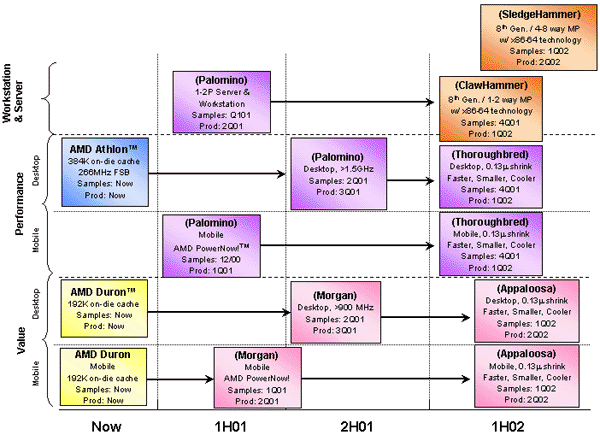
AMD heeft een nieuwe processor roadmap online gezet waarin de wijzingen zijn doorgevoerd die vandaag op de CeBIT bekend werden gemaakt. Eerder heb je in deze nieuwsposting kunnen lezen dat de release van de desktop Palomino en Morgan is uitgesteld tot het derde kwartaal. AMD maakt weinig haast met de introductie van deze processors omdat het voorrang geeft aan de mobiele en server/workstation versies van de Palomino en omdat de huidige Thunderbird core nog verder kan scalen tot 1,4GHz.

De nieuwe AMD roadmap spreekt wat dat betreft voor zich. Dit kwartaal gaat de mobile Palomino in produktie en in het tweede kwartaal volgt de server en workstation Palomino. Het verschil tussen deze processor en de desktop Palomino is vooralsnog onbekend. Wel maakt deze roadmap duidelijk dat de 760MP chipset nog in het tweede kwartaal moet komen. De vroege introductie van de server/workstation Palomino zou verband kunnen houden met warmteproblemen van een dual Thunderbird setup of met het volledig ontbreken van SMP support op de huidige Thunderbird en Duron processors. Dit zijn mijn eigen speculaties, dus vooral niet voor waar aannemen .

Verder in de toekomst zien we de desktop en mobile versies van de Palomino in het eerste kwartaal van 2002 opgevolgd worden door de 0,13micron Thoroughbred core. Het low-end server/workstation segment wordt in dezelfde periode overgenomen door de 64-bit ClawHammer processor. In het tweede kwartaal van 2002 komt de SledgeHammer, bedoelt voor high-end 4 tot 8-way configuraties. De onderkant van de markt wordt bediend met de Appaloosa processor:

AMD roadmap update - maart 2001

Reacties (26)

Lees meer

AMD processor roadmap informatie
AMD processor roadmap informatie Nieuws van 30 augustus 2001
AMD processor roadmap update
AMD processor roadmap update Nieuws van 4 juli 2001
AMD Duron 900 review @ AMDZone
AMD Duron 900 review @ AMDZone Nieuws van 2 april 2001
VIA Hardware WinHEC 2001 verslag
VIA Hardware WinHEC 2001 verslag Nieuws van 31 maart 2001
Ace's Hardware CeBIT 2001 verslag
Ace's Hardware CeBIT 2001 verslag Nieuws van 26 maart 2001
Dean Kent Industry Update - maart
Dean Kent Industry Update - maart Nieuws van 21 maart 2001
Samenvatting AMD webcast
Samenvatting AMD webcast Nieuws van 6 maart 2001
AMD Athlon en Duron Roadmap Update
AMD Athlon en Duron Roadmap Update Nieuws van 8 februari 2001

Guide: PC GeForce2 MX flashen met Mac firmware

Door Hielko van der Hoorn, 22 maart 2001 20:1013 reacties, bron: http://www.xlr8yourmac.com

zakalwe schrijft dat bij de site Accelerate Your Macintosh een handig stappenplan is verschenen voor Mac gamers. Daar wordt namelijk beschreven hoe je een standaard GeForce2 MX kan flashen met een Mac firmware zodat je de kaart kan gebruiken in je Macintosh. Het enige wat je moet doen is de BIOS versie bemachtigen voor een Mac GeForce2 MX (Apple Update), de BIOS file flashen richting je GeForce2 MX en je GeForce2 MX in je Mac stoppen. Alles op eigen risico natuurlijk :

The card I used is an Elsa (www.elsa.com) Gladiac MX - GeForce2MX, 32 MB SDR Ram, AGP board. This is a standard/classic reference board design, nothing fancy. It looked exactly like the Apple board except it did not have the extra video connector and was missing a chip which I assume is used for the other connector. I had learned previously that the EEPROM on my Elsa board was the same as the Apple board, a SST 39VF512 (NVFLASH shows it as: EEPROM man.ID,devcode (BF, D4) : SST 39VF512 2.7-3.6V 64Kx8, byte mode). Since the EEPROMs were the same, I was pretty sure I could get it to work without any hitches.[break]De laatste stap:[/break]Now your ready to go, simply put all the new extensions that came with the 1.1.1 updating into the extension folder, shutdown your Mac, plugin the PC AGP card and watch the smoke! ... umm, well, ok you shouldn't get any smoke... Mine worked first time and flawlessly. You might need to give it a little time to boot.

Zeker handig als je graag je hoogbejaarde ATi Rage Pro wilt vervangen...

Reacties (13)


ATi koopt FireGL over van SonicBlue

Door Wouter Tinus, 22 maart 2001 19:1524 reacties, bron: ATi

Blue stuurde ons deze link naar een pagina waarop ATi bekend maakt dat ze FireGL voor tien miljoen dollar overkopen van SonicBlue. FireGL is een voormalig onderdeel van Diamond, dat is opgekocht door S3, tegenwoordig SonicBlue. De kaarten van FireGL zijn gebaseerd op chips van IBM en gericht op professionele workstations, zoals degene die gebruikt worden voor CAD/CAM en 3D modelling. Op dat gebied heeft ATi op dit moment nog niets te vertellen, maar het bedrijf is er wel degelijk in geïnteresseerd. De makers van de Radeon krijgen van SonicBlue de FireGL merknaam, contracten met een groot aantal klanten waaronder Dell en Compaq en 35 man personeel:

“Our intent to acquire FGL Graphics represents a strategic investment for ATI, accelerating our entrance into the high-end workstation market by as much as two years through a combination of current OEM contracts, strong ISV partnerships and a dedicated team focused on delivering OpenGL-based technologies,” said David Orton, President & Chief Operating Officer, ATI Technologies Inc. “Of equal importance to ATI is that this acquisition will further strengthen our position in the high-performance commercial desktop PC market by enabling us to drive certified and qualified Fire GL technology across future generations of ATI desktop products.”

“The completion of this transaction will enable us to focus our attention and resources on high growth opportunities within the digital media industry,” says Ken Potashner, CEO and Chairman, SONICblue Incorporated. “We intend to continue to pursue our strategy of leveraging our leadership position in digital audio to aggressively pursue opportunities in home networking, Internet appliance and digital video markets.”

Reacties (24)


Hercules brengt GameSurround Muse XL uit

Door Wouter Tinus, 22 maart 2001 18:4717 reacties, bron: Hercules

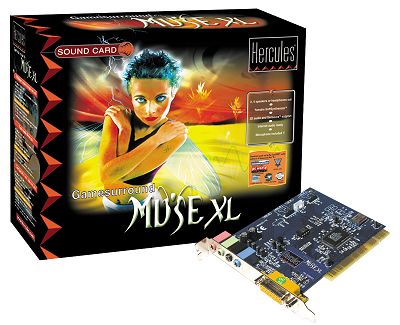
Op de site van Hercules is een pagina verschenen over de GameSurround Muse XL geluidskaart. Deze is uitgerust met een Yamaha SoftSynthesizer en heeft ondersteuning voor vier-kanaals 3D geluid verzorgd door Sensaura. Dat wil dus zeggen dat een groot aantal standaarden, waaronder EAX 2.0, DirectSound 3D en A3D 1.0 worden ondersteund. De kaart wordt geleverd met een microfoon en een hoop software, waaronder PowerDVD en MusicMatch Jukebox. Het is de bedoeling dat de kaart begin april in de winkels ligt. Voor de zeer vriendelijke prijs van ongeveer 30 dollar hoef je hem in ieder geval niet te laten liggen:

Gamesurround Muse™ XL, based on a CMI-8738 audio chipset, is the first card to offer an amazing list of features as well as full Sensaura™ 3D Positional audio technology on its 4-speaker outputs, at such a low price. Sensaura's technology allows for optimal compatibility with most advanced 3D audio games (includes A3D™ 1.0, EAX™ 1.0 & 2.0 API support). High fidelity music playback is also guaranteed with the integrated Yamaha S-YXG50 SoftSynthesizer™ . Compatible with both General MIDI and Yamaha XG standards, this new processor reproduces excellent quality MIDI sound.

GameSurround Muse XL

Bedankt SkatgeoaT voor de link.

Reacties (17)


Klachten bij overheid ingediend over Hailstorm

Door Wouter Tinus, 22 maart 2001 18:2857 reacties, bron: The Industry Standard

Microsoft's demonstratie van de .NET technologie Hailstorm is bij sommige mensen in het verkeerde keelgat geschoten. Onder andere AOL/Time Warner en Sun hebben klachten ingediend bij de Amerikaanse overheid over het nieuwe systeem. Hailstorm is kort samengevat een manier om persoonlijke voorkeuren en documenten op internet op te slaan, zodat software op alle computers over de hele wereld zich aan de persoonlijke wensen van de gebruiker kan aanpassen. Ondanks de demonstratie van Hailstorm op UNIX en MacOS zien de concurrenten het project als een poging van Microsoft haar monopolie-positie te versterken. Mogelijk wordt dit punt als bewijs gebruikt in de nu lopende rechtszaken:

On Friday, AOL TW officials had a breakfast briefing with several state attorneys general involved in the government's pending antitrust lawsuit against Microsoft, which is under review by the U.S. Court of Appeals for the District of Columbia. AOL TW raised concerns that Microsoft's new products could create a choke point on the Internet for e-commerce, instant messaging and downloadable music.

An AOL TW official told TheStandard.com on Monday that Microsoft's latest offerings were an effort "to make sure that eventually there is no reason to use anything but the versions of programs that Microsoft gives you."

In many ways, the complaints surround the same kinds of behavior that prompted the 1998 government lawsuit against the Redmond, Wash.-based company. At that time, Microsoft battled Netscape by integrating a Web browser into Windows and striking deals with computer makers and Web sites to give its own product a leg up.

"We need to review the details, but some of the same kinds of antitrust issues seem to be raised," says Connecticut Attorney General Richard Blumenthal, who listened to the AOL breakfast briefing by phone. Blumenthal declined to comment on whether or how Friday's briefing would factor into the states' tactics in the ongoing case. "We really need to think and learn more about it before we can even reach a tentative conclusion."

CoG wordt bedankt voor de submit.

Reacties (57)


AMD demonstreert Palomino systemen op CeBIT

Door Wouter Tinus, 22 maart 2001 18:1333 reacties, bron: TecChannel

Op CeBIT stand van AMD zijn naast de officiële aankondiging van de nieuwe 1,3GHz processors een aantal systemen met Palomino processors te vinden. Er draait een 1,53GHz versie op een GigaByte AMD 760 moederbord en er is een 760MP systeem met een tweetal 1200MHz Palomino's te bewonderen. Ook vinden we er een 1U Linux server uitgerust met de 760MP chipset en twee 900MHz Palomino processors. Als het aan AMD ligt zal de multi-processor chipset tegelijk met de nieuwe core uitkomen in het tweede kwartaal. Er moet meteen na de aankondiging een 1,7GHz versie beschikbaar zijn. Natuurlijk zijn er ook plaatjes beschikbaar, waarop meteen opvalt dat de nieuwe core en andere vorm heeft en platter lijkt te zijn. Ook is duidelijk te zien dat het aantal bruggen op de behuizig is gestegen:

Mit der noch nebulösen Aussage "Mehr als 1,5 GHz" steht der Palomino als Einzel-CPU für Desktop-PCs in AMDs Roadmap. Anhand der heute gezeigten 1533 MHz wäre das schon erfüllt. Da AMD aber erst im zweiten Quartal Muster und im dritten Stückzahlen des Prozessors ausliefern will, wird es wohl für die MHz-Krone nicht ganz reichen.

Unbestätigten Informationen zufolge will Intel im dritten Quartal einen Pentium 4 mit 1,7 GHz vorstellen. Damit bahnt sich ein neues Gigahertz-Rennen an, in dem Intel bisher durch den Pentium 4 weit in Führung lag. Sollte es AMD gelingen, schon zum Start einen Palomino mit 1,7 GHz zu liefern, bliebe Intel auch im obersten Marktsegement allein noch die Netburst-Architektur und die Überlegenheit bei SSE2-Anwendungen. Die nackte MHz-Zahl, die immer noch für das Marketing sehr wichtig ist, jedoch wie unsere Tests immer wieder zeigen, nur wenig über die reale Performance aussagt, wäre dann nicht mehr Intels unschlagbares Argument. Der Sommer wird heiß.

* Palomino:

AMD Palomino

* Thunderbird:

Thunderbird 1300MHz

Bedankt voor de tip dangerous.

Reacties (33)


Eerste officiële GeForce3 review met benchmarks

Door Hielko van der Hoorn, 22 maart 2001 17:1645 reacties, bron: AnandTech

Op AnandTech is de eerste review neergeplant over de GeForce3 waarin niet alleen de features worden besproken, maar ook benchmarks worden gedraaid met de 11.01 Detonator drivers. Eerder was niet mogelijk omdat de drivers gewoon nog niet goed klaar waren, en daarnaast waren er nog geen DirectX 8 benchmarks beschikbaar om de kaart goed te kunnen testen.

Uit de Aquanox benchmarks bij AnandTech blijkt dat de GeForce3 het aardig weet te doen in DirectX 8 vergeleken met andere kaarten zoals de GeForce2 Ultra en de Kyro II. In 1024x786x32 weet de GeForce3 een score van 33,4 FPS neer te zetten waar de GeForce2 Ultra niet verder komt dan 19,9 en de Kyro II niet verder dan 12,4. Niet slecht dus vergeleken met de concurrentie, maar zeker ook niet schitterend aangezien ongeveer 30 FPS op deze resolutie tegenwoordig toch wat magertjes is.

In ‘oude’ DirectX 7 games weet de GeForce3 ook aardige prestaties neer te zetten. Dankzij de Lightspeed Memory Architecture weet de GeForce3 tussen de 20 à 30 procent betere prestaties neer te zetten dan de GeForce2 Ultra. In Quake III Arena in 1600x1200x32 weet de GeForce3 bijvoorbeeld een framerate van 70,5 FPS neer te zetten .

Zoals je waarschijnlijk al verwachte kan Anand je niet echt een GeForce3 aanraden. Voor de stevige prijs van 500 dollar weet hij maar een klein beetje sneller te zijn dan de GeForce2 Ultra in oude games en DirectX 8 heb je voorlopig nog niet nodig. Je kan dus beter wachten op de opvolger van deze kaart:

nVidia GeForce3 chip (klein)We are still very impressed with the GeForce3, and applaud NVIDIA for architecting a wonderful chip and the technology behind it. However the fact remains that in spite of how great the technology is, the GeForce3 isn't something we can recommend at this point in time.

The only real performance advantages the GeForce3 currently offers exist in three situations: 1) very high-resolutions, 2) with AA enabled or 3) in DX8 specific benchmarks. You should honestly not concern yourself with the latter, simply because you buy a video card to play games, not to run 3DMark on although there will be quite a bit of comparing of 3DMark scores of the GeForce3 regardless of what we think.

The AA quality and performance of the GeForce3 is quite attractive, but at a $500 asking price it quickly loses its appeal as does the charm of high frame rates at very high resolutions.

If you must purchase a card today and aren't going to replace it for the next two years, then the GeForce3 is not only your best bet, it's your only choice. But if you can wait, we strongly suggest doing just that. In 3 - 4 months ATI will have their answer to the GeForce3, and in 3 months following that, NVIDIA will have the Fall refresh of the GeForce3 running on a smaller process, at a higher clock speed, offering more performance and features at a lower cost.

Reacties (45)


Nieuwe AMD processors aangekondigd en getest

Door Wouter Tinus, 22 maart 2001 17:0429 reacties, bron: AMD / Diversen

Vandaag heeft AMD de Athlon 1,3 en 1,33GHz officieel aan de wereld onthuld op de CeBIT beurs in het Duitse Hannover. Meteen na de aankondiging zijn er een groot aantal reviews op het internet verschenen. Eén van de betere is zoals gewoonlijk die van AnandTech, waar men eerst de roadmap van AMD bespreekt. De processor waar iedereen op zit te wachten is namelijk de eerste voorzien van de Palomino core. Dat de Thunderbird nooit hoger dan 1,4GHz verkocht kan worden mag duidelijk zijn. Deze twee nieuwe beestjes eten beide al meer dan 70 Watt. Overklokken was echter geen probleem, de 1,33GHz versie haalde zonder problemen de 1,5GHz. Iets ander dat opvalt aan de kersverse CPU's is een klein maar opvallend verschil in de behuizing. Dit zou een gevolg kunnen zijn van het cancellen van de Mustang, een server-versie van de Athlon met een groter L2 cache.

Uiteraard zijn er ook flink wat benchmarks gedaan, waarin de 1,33GHz chip het moet opnemen tegen één van zijn voorgangers, de Pentium III en de Pentium 4. De benchmarks van de Athlon zijn zowel op een KT133A moederbord als op een AMD 760 moederbord met DDR geheugen gedaan. We vinden onder andere grafieken terug van SYSMark, WebMark, Quake3, Unreal Tournament en MP3 encoding. De nieuwe chip is natuurlijk sneller dan zijn voorgangers en in veel gevallen moet ook de Pentium 4 in het stof bijten, maar of het wel zo slim is om er één te kopen valt te betwijfelen:

AMD 1,33GHz plaatjeThe Pentium 4 isn't as bad of a performer as we originally thought. The Linpack and Sandra memory performance graphs we have been showing you all for so long have surfaced in a few real world tests where the Pentium 4's architecture combined with its incredible memory bandwidth end up performing quite well. The unfortunate problem with the Pentium 4 is that it is too expensive and it doesn't offer enough of a performance boost in the majority of today's applications to be worth it. Just as we are waiting for AMD to release Palomino, Intel's Northwood Pentium 4 core may be worth the wait as well. At 0.13-micron, the Northwood core should help to lower prices on the processors and by then the processor will also be using its new Socket-478 interface, so we will revisit the idea of going down the Pentium 4 route at that time. For now, it still doesn't make much sense to upgrade to the Pentium 4. You're better off getting a cheap solution in the interim (possibly a Duron) and making the decision once Palomino and Northwood are out.

Finally, we get to the Athlon, the topic of this review of course. Now at 1.33GHz, the Athlon is running faster than ever. However the most attractive point about the Athlon outside of its performance, is its price to performance ratio. The benefit of the 1.33GHz Athlon right now is that it will help drive the prices of the rest of the Athlon line down even further. If you already hadn't noticed, the 1GHz Athlon we used in this comparison performed quite well, and is currently very affordably priced.

AMD has also been improving yields on their Athlons, we were recently testing an OEM 1.1GHz Athlon that would work perfectly fine at 1.33GHz without even increasing its core voltage. The 1.33GHz part we used for these tests, in spite of its incredible heat dissipation, was able to hit just under 1.5GHz without too much effort. If AMD can get the current Thunderbird core to carry them to 1.5GHz and beyond, they might just save Palomino for a rainy day and hope to hit with something much harder than just a cooler running core.

Tot slot nog even de prijzen:

Athlon Prijs
1333MHz$350
1300MHz $318
1200MHz / 266MHz$294
1200MHz / 200MHz $268
1133MHz $265
1100MHz $241
1000MHz / 266MHz $224
1000MHz / 200MHz $204
950MHz $184

Wil je zelf over de nieuwe Athlon's lezen check dan de volgende links:

Reacties (29)


Promise introduceert nieuwe ATA100 controllers

Door Femme Taken, 22 maart 2001 16:4522 reacties, bron: Promise.com

Promise heeft een aantal nieuwe ATA100 controllers in de Ultra100 en FastTrak100 serie aangekondigd. Opvallend kenmerk van de nieuwe controllers is ondersteuning voor de snelle 66MHz PCI bus, die op veel server mobo's wordt gebruikt. Dankzij 66MHz PCI support zijn de nieuwe Ultra100 en FastTrak100 controllers in staat om de volledige theoretische bandbreedte van twee ATA100 channels te leveren.

De eerste nieuwe controller is de RAID-loze Ultra100 TX2. Promise noemt als bijzonder features de support voor high-speed CRC error-checking en de meegeleverde software drivers die de harddisk performance onder Winbench '99 op wonderbaarlijke wijze met maximaal 40% laten toenemen. De Ultra100 TX2 werkt onder Netware 3.12/4.1/5 en alle moderne Windows versies:
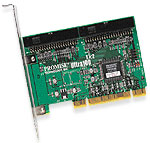
Promise Ultra100 TX2 (klein) Promise Technology, Inc. announced today it will begin distribution of the first 66MHz PCI Bus controller card designed to support Ultra ATA/100 drives. The Ultra100 TX2 provides complete Ultra ATA/100 support for 66MHz PCI-based motherboards that allow up to 200MB/sec PCI bus data transfers. Ultra100 TX2 will have a suggested list price of $49.

The new card supports all features of Ultra ATA/100 drives, including 100MB/sec burst data transfers and CRC high-speed error-checking. Ultra100 TX2 can be used on 33MHz PCI motherboards and is backward-compatible with older Ultra ATA and IDE drives.

Promise Ultra100 TX2 also improves drive performance under Windows 98/ME/NT4/2000. Ultra100 TX2's software drivers automatically boost performance for all drives (ATA and SCSI) installed in a PC by up to 40 percent.[1]

Ultra100 TX2 bundles a free Ultra ATA 80-wire/40-pin cable that offers improved data reliability and signal integrity by adding 40 extra ground wires than standard 40-wire/40-pin IDE cables. Without the required cable, Ultra ATA/100 drives will only run at 33MB/sec.

Up to four drives and/or ATAPI devices are supported by the two IDE ports on the Ultra100 card. Each port offers separate device timing to run each attached device at its highest-rated speed. Ultra100 TX2 also provides bus mastering for improved performance.

[...] The new card works with major operating systems including Windows 2000/NT4/ME/98/95, and Netware 3.12/4.1x/5.


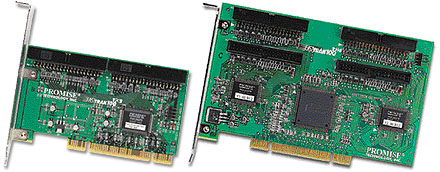
In een tweede persbericht wordt de release van de FastTrak100 TX en LP aangekondigd. De FastTrak100 TX kan geleverd worden in twee versies met twee (TX2) of vier (TX4) onafhankelijke ATA100 channels. In beide gevallen kunnen er maximaal vier drives aangesloten worden. De TX4 heeft hierbij als voordeel dat elke harddisk een eigen ATA100 channel tot zijn beschikking heeft. De RAID support is beperkt tot striping, mirroring en RAID 0+1 (striping en mirroring). Evenals bij de oudere FaskTrak controllers ontbreekt ondersteuning voor RAID 5.

De LP versie van de FastTrak100 werd specifiek ontwikkeld voor gebruik in 2U rackmounts. Alle FastTrak kaarten ondersteunen hot spare, hot swap en worden geleverd met driver support voor Windows, Netware en Red Hat Linux: [/break] Promise Technology, Inc. today announced the latest addition to its industry-leading line of ATA RAID products – the FastTrak100 TX & LP Series of ATA RAID PCI cards. Compatible with the latest 66MHz PCI bus motherboards, the FastTrak100 TX & LP series offers data transfer rates in RAID 0 (striping) of up to 200 megabytes (MB) per second (depending on the number and type of drives used in the system) – double the rate of the fastest system using an ATA 100 drive, the fastest ATA drives currently available.

The FastTrak100 TX & LP Series features three product families, each providing users with specific and unique performance, feature and value options. The FastTrak100 TX4 (available Q2, 2001) offers the highest performance and capacity. With four separate ATA/100 drive connections, the FastTrak100 TX4 allows each attached drive to use an independent data channel, assuring maximum performance for each drive. The FastTrak100 TX4 enable users to configure RAID arrays in RAID 0 (striping), RAID 1 (mirroring) or RAID 0+1 (striping and mirroring).

The FastTrak100 TX2 offers the same features, but with two, rather than four, data channels. The cards still allow four drives to be configured, but each channel will carry two drives. This offers users similar performance and capacity benefits to the TX4, but at a lower cost to provide a solution for nearly every budget.

Finally, the FastTrak100 LP allows users of low-profile PCs or 2U rackmount chassis to benefit from either RAID 0 or RAID 1 configurations. The FastTrak100 LP is designed to fit in smaller PCs and other systems while still offering outstanding performance and data redundancy not easily available to these users in the past.

All cards support hot spare and hot swap for 24/7 operations. Operating system supports includes Windows 2000/NT4/ME/98/95, RedHat Linux 6.2/7.0, Netware 3.12/4.1x/5.0

Promise FastTrak TX2 en TX4

Reacties (22)


Desktop Palomino en Morgan opnieuw gedelayed

Door Femme Taken, 22 maart 2001 12:4328 reacties, bron: News.com

News.com meldt dat AMD vandaag eindelijk de langverwachte 1,3 en 1,33GHz Athlon processors zal aankondigen. Tegelijkertijd is bekend geworden dat de release van de Palomino en Morgan, opvolgers van respectievelijk de Thunderbird en Spitfire core, is uitgesteld tot het derde kwartaal. Aanvankelijk stond de introductie van deze desktop processors gepland voor het vierde kwartaal van 2000. Tot voor kort werd een release in het tweede kwartaal van dit jaar genoemd.

Het uitstellen van de desktop processor releases geeft AMD naar eigen zeggen de gelegenheid om zich eerst te focussen op de introductie van processors voor het notebook en server/workstation segment. De mobile Athlon, tevens gebaseerd op de Palomino core, zal nog dit kwartaal geleverd worden in kloksnelheden tot 1GHz. In het tweede kwartaal wordt een Palomino versie voor single en dual processor workstations en servers geïntroduceerd. Volgens News.com heeft deze processor waarschijnlijk een groter L2 cache dan de desktop Palomino. Dit nieuws komt tamelijk onverwacht aangezien de large-cache Mustang, waarmee deze workstation/server Palomino verband lijkt te houden, in november 2000 werd gecancelled.

Spitfire, de basis van de huidige Duron processor, wordt in het derde kwartaal opgevolgd door de Morgan core. De Morgan variaties zullen beginnen op snelheden van minimaal 900MHz:

AMD executives said the chipmaker chose to push back the desktop chips so that the company can first focus its efforts on bringing the chips to market in notebooks as well as workstations and servers.
[...] AMD's mobile Athlon chip will "ship in volume this quarter up to 1GHz...to enable (manufacturer) availability next quarter," he added.

The chipmaker also plans to introduce a Palomino chip for single- and dual-processor workstations and servers in the second quarter. This chip is expected to offer a larger cache. AMD will pair the new chip with its 760MP chipset, which it also plans to ship in the second quarter.

Reacties (28)

Lees meer


AMD Athlon 1,3 en 1,33GHz review

Door René van den Berg, 22 maart 2001 12:2219 reacties, bron: Got Apex?

Got Apex? heeft een review gebakken van AMD's nieuwste processors, de Athlon Thunderbird 1,33GHz met een 266MHz FSB en de TBird 1,3GHz met een FSB van 200MHz.

Beide exemplaren zijn door de reviewer op de pijnbank gelegd en onderworpen aan de diverse benchmarks. Daarnaast zijn ze allebei natuurlijk ook getest op overclockbaarheid. Hierin bleek de 1,33GHz de beste resultaten op te leveren: 1431MHz en stabiel, daar waar de 1,3GHz 'slechts' tot 1404MHz wilde komen. De reviewer wijst nog eens met nadruk op de kwetsbare core van de Athlons: oplettendheid is geboden bij het plaatsen en verwijderen van je koeler!

De reviewer is heel tevreden met de 1,33GHz TBird, maar minder goed te spreken over de 1,3GHz: die presteert niet beter dan een 1,2GHz Athlon 'C' met een FSB van 266MHz, en komt tot de volgende conclusies:

The decision to upgrade to the 1.33GHz is a no-brainer if you are in the market for a new chip. The Athlon Thunderbird 1.33GHz offers the pinnacle in overall performance and its use of the 266MHz FSB makes it all the more attractive. I have no qualms in recommending the AMD Athlon 1.33GHz processor to those seeking pure performance. I do, however, have a tough time recommending its 1.3GHz cousin.

While the Athlon 1.3GHz does offer excellent performance, with a price drop eminent on the 1.2GHz 266MHz FSB Athlons, you will see better returns with the 1.2GHz "C" Athlon. As we saw in our benchmarks, the faster FSB more than makes up for the slower core clock. Either way, AMD has got you covered by offering something for everyone.


Athlon 1.3GHz
Pros:
Excellent performance
Average overclockability
DDR mainboards are readily available
Cons:
Core's are very fragile (be careful when applying those sinks)
1.2GHz "C" Athlons may be a better investment

Athlon 1.33GHz
Pros:
Outstanding performance
Decent overclocking candidate
DDR mainboards are readily available
"C" 266MHz FSB chips finally bring PC133/PC266 to the Athlon platform
Cons:
Core's are very fragile (be careful when applying those sinks)

Het complete verhaal kun je nalezen op de site van Got Apex?.

Reacties (19)


Logitech komt met draadloze optische muis

Door Wouter Tinus, 22 maart 2001 01:02144 reacties, bron: Logitech

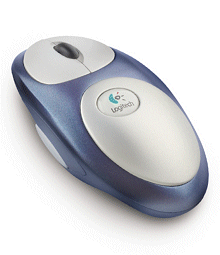
runob was de eerste die ons op deze pagina van Logitech wees, waar het bedrijf de Cordless MouseMan Optical tentoonstelt. De muis is met zijn 800 dpi zeer nauwkeurig en heeft bovendien een aantal handige features, zoals de weergave van de batterij-status in de tray van Windows en een vierde knop aan de linkerkant van het ergonomisch ontworpen apparaatje. Met behulp van de WebWheel software kan de werking van verschillende knoppen worden aangepast. De nieuwe muis moet ongeveer 3 maanden zonder vervanging van de krachtbron kunnen werken:

Logitech Mouseman Cordless OpticalLogitech's power-saving cordless technology
Logitech has developed a technologically advanced solution to maximize and optimize battery life in its cordless pointing devices. The engineers have worked for over a year to maximize battery life with no effect to performance. This mouse works even better than a corded mouse in accuracy, precision and responsiveness.

Next generation of optical technology
Precision. Durability. Flexibility. Logitech Optical Mice represent an innovative advance in pointing device technology. Combining its award-winning designs and expertise with state-of-the-art optical components, Logitech delivers a new level of products that eliminate many issues typically associated with ball-based mice.

Reacties (144)


Asus A7V266 KT266 moederbord press release

Door Wouter Tinus, 22 maart 2001 00:4634 reacties, bron: X-Bit Labs

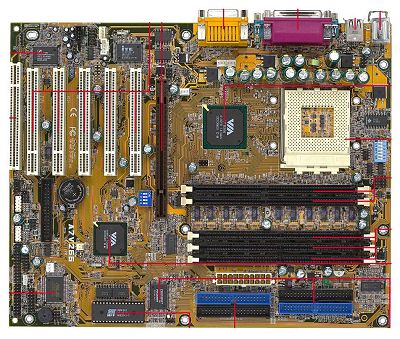
Bij X-Bit Labs heeft men een press release van Asus online gezet over de A7V266, een Socket A moederbord voorzien van de VIA KT266 DDR chipset. Het plankje is voorzien van AGP Pro, vijf PCI slots en ACR. Daarnaast vinden we een duo 184 pins DDR SDRAM gleuven en een drietal 168 pins slots voor normaal SDRAM. Ook zijn er een Promise ATA/100 RAID controller en een C-Media geluidschip van de partij. De meegeleverde software bestaat onder andere uit PowerDVD, een virusscanner en de gebruikelijke tools als AsusProbe. Het overklokken van het plankje kan overigens geheel zonder jumpers gebeuren:

  • CPU
    • Socket A for AMD Athlon 550MHz~1.3GHz+
  • Chipset
    • VIA KT266 Chipset (KT8366 North Bridge with VT8233 South Bridge)
  • FSB
    • 200/266MHz FSB
  • System Memory
    • 2 x DDR DIMM slots support max. 2GB PC2100/PC1600 DDR SDRAM
    • 3 x SDRAM DIMM slots support max. 3GB PC133/PC100 SDRAM
  • Expansion Slots
    • 1 x AGP Pro/AGP 4X
    • 5 x PCI
    • 1 ACR
  • IDE Ports
    • 2 x UltraDMA/100
    • Promise UltraDMA/100 RAID Controller support 2 additional IDE ports and RAID 0,1
  • Audio
    • C-media CMI-8738 PCI Audio Controller
    • 6-Channel Speaker Mode
Asus A7V266

Bedankt voor de submit samar.

Reacties (34)

Lees meer


Pentium III Xeon 900MHz met 2MB cache aangekondigd

Door Wouter Tinus, 22 maart 2001 00:3225 reacties, bron: C|Net

Intel heeft deze week de laatste Xeon processor gebaseerd op de Pentium III core geintroduceerd. Het gaat om een 900MHz versie met 2MB L2 cache, die gericht wordt op grote 8-way servers. Het grote cache en een paar andere features waardoor de Xeon zich van de Pentium III onderscheidt komen de prijs niet ten goede, deze ligt namelijk ruim boven de 8.000 gulden. Van de vorige large-cache releases (550 en 700MHz) waren zowel 1 als 2MB versies te krijgen. Intel heeft echter laten weten dat de eerste optie bij dit model niet meer aanwezig is. De volgende Xeon zal op 1,4GHz lopen en gebaseerd zijn op de Pentium 4 Foster core:

The larger cache boosts performance and permits computer makers to incorporate the chip in four- and eight-processor servers that will compete against servers from Sun Microsystems and Compaq Computer's AlphaServer line. Sun will release new servers Wednesday at an event in New York. "The 900MHz Xeon is really the flagship for eight-way servers," said Tom Garrison, product marketing director at Intel.

Although Santa Clara, Calif.-based Intel comes out with a new desktop chip every couple of months, server and workstation chips are released on a more gradual schedule. Typically, corporate customers don't want frequent upgrades because of the time and expense involved in testing equipment before installation.

[...] "The qualification cycles and the way corporate IT (managers) adopt the technology is more on a six-month schedule," Garrison said. "We're spacing the products out every six months."

We danken vink voor het insturen van dit nieuws.

Reacties (25)


Het geheime wapen van de platenindustrie?

Door Wouter Tinus, 22 maart 2001 00:11121 reacties, bron: 7am News

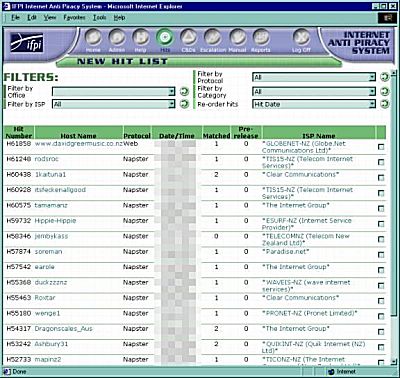
gday wees ons op een wel heel merkwaardig stukje tekst waarin het geheime wapen van de platenmaatschappijen in de strijd tegen copyright-schendingen. Het Internet Anti Piracy System (IFPI) maakt gebruik van een stuk geavanceerde stofware dat de naam "Media Tracker" draagt. Deze software is in staat om op peer-to-peer netwerken zoals Napster en Gnutella in te loggen, search engines door te spitten, IRC kanalen passief in de gaten te houden, nieuwsgroepen te lezen en door FTP sites heen te browsen. Tijdens de zoektochten wordt een grote database samengesteld met al het copyright schendende muziek-materiaal en de providers van de overtreders. Door de gegevens aan justitie en de betreffende ISP door te geven worden deze bijna verplicht om actie te ondernemen. Mensen die zich veilig voelen omdat niemand is staat is om alle illegale MP3 bestanden op internet in de gaten te houden zouden dus wel eens bedrogen kunnen uitkomen:

By performing structured queries of the database, recording companies are able to produce a list of offending machines, IP numbers and connection times for any ISP. Word is that this information will be regularly sent to ISPs whose users are breaching copyright with a demand that, in the first instance, the ISPs take action to stop those users re-offending. The system is capable of performing follow-up queries of machines that are known offenders and if found to still be breaching copyright, legal action could be launched.

Forcing the ISPs to police their own customers (or perhaps face legal action as a contributing infringer) is a smart way to stem illegal music exchanges online. With an automated process, larger ISPs could be deluged with warning notices and soon find the cost of following up those complaints to be significant. It's a smart move on the part of the recording industry and may effectively force ISPs to join the battle against piracy.

The ISP industry's response to the system remains to be seen but it could backfire. What happens if they start clearing their access logs on an hour-by-hour basis in order to honestly claim that they are unable to identify the offending parties by their IP numbers? It would appear that the recording industry is now trying to box smarter -- but have they underestimated the Internet and its users?

Media Tracker screenshot

Reacties (121)