Nadat Anandtech vandaag 15 grafische kaarten aan de tand voelde onder de nieuwe Unreal engine van Epic, is het nu de beurt aan Tom's Hardware Guide om iets soortgelijks te doen. Niet met de nieuwe Unreal engine maar met een andere 3D engine, de Krass engine van het spel Aquanox. Het grote verschil tussen de nieuwe Unreal engine en de Krass engine zit hem in het massale gebruik van pixel- en vertexshaders in de Krass engine. Het is dan ook niet verwonderlijk dat tijdens de introductie van GeForce 3, Aquamark - de demo van Aquanox - door nVidia werd gebruikt om de kunstjes van de GeForce 3 te demonstreren.
 THG test zowel met een Pentium 4 1,8GHz als een Athlon Thunderbird 1333MHz. Uit de benchmarks blijkt dat in Aquanox de ATi Radeon 8500 en de GeForce 3 Ti500 het beste presteren. Bezitters van een Kyro II of GeForce 2 MX400 kaart, kunnen Aquanox beter links laten liggen, want deze zijn te langzaam om het spel met een fatsoenlijke framerate te kunnen spelen. De conclusie van Tom's Hardware Guide is dan ook dat, om de nieuwste DirectX8 spellen te spelen, je beter af bent met een ultrasnelle grafische kaart dan met een ultrasnelle CPU:
While current video cards have no trouble with older games like Quake 3, running them at record speeds of around 150fps even at high resolutions, the new crop of DirectX 8 games can bring even these performance monsters to their knees. The CPU is really only of secondary importance, as the scores of the Athlon 1333 system show.
The scores shown here are average frame rates. Performance may be even lower in the game, depending on the complexity of the scene, the number of enemies on screen, etc. Activating FSAA is the final blow, bringing the frame counter lower still. Yet the trend is pointing towards ever more complex 3D engines (due in large part to the Xbox). If you're planning on buying a GF2 or R7500 now, you may find yourself lowering the detail level or the resolution in the near future, just to make upcoming games playable. Even a GF3 Ti200 reaches its limits rather quickly. Nonetheless, don't panic just yet - games that make extensive use of pixel or vertex shaders are still a bit further off on the horizon. In today's games, you'd need a magnifying glass to even find any of these new effects (as in Comanche 4).
:strip_exif()/i/1005235095.jpg?f=thumbmedium)

:strip_exif()/i/1005664296.jpg?f=thumbmedium)
:strip_exif()/i/992451706.jpg?f=thumbmedium)
:strip_exif()/i/983372099.gif?f=thumbmedium)
:strip_exif()/i/1005235184.jpg?f=thumbmedium)
:strip_exif()/i/993738915.jpg?f=thumbmedium)
 Bij
Bij  The performance improves because a single chip can do a number of things. "It is not really a question of speed -- you are always going real fast -- but a question of how many things you can pack together," said HP scientist Phil Kuekes, a computer architect on the team which was awarded the patent. "We see a future where the chips will come out and no two chips will be identical. Each one will be customized for a particular function," said HP's Stanley Williams, the chemist in the group. UCLA professor James Heath was the third member of the team.
:strip_exif()/i/1336040302.jpeg?f=fpa)
 -tjes! Dag 113 achter elkaar op #1 !

 3)
3) 1)
1) )
) Al vier jaar hanteren we dezelfde uiterst scherpe prijs. Om een supersnelle internetverbinding te waarborgen, investeren we bovendien continu in onze netwerkinfrastructuur. Door deze prijsaanpassing blijven we optimaal aan uw eisen van kwaliteit en snelheid beantwoorden.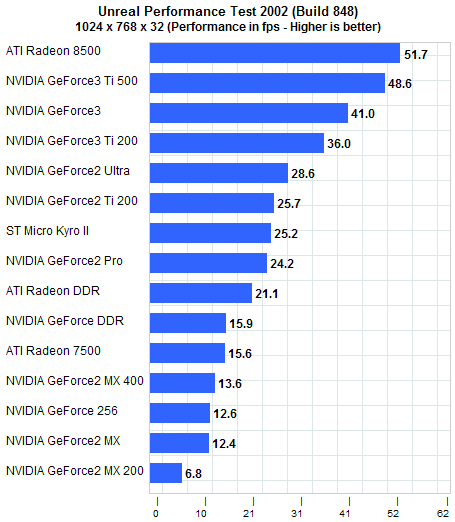

 In hoeverre er nog een toekomst is voor Rambus bij Intel, is zeer onzeker geworden. [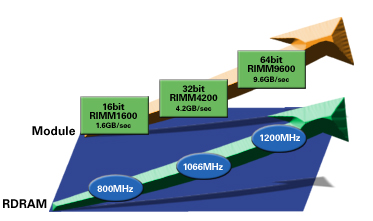
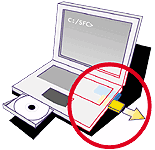 Nevertheless, portable fuel cells are in their infancy. Investment costs to generate 1 kilowatt are still very high, around $10,000 to $100,000 dollars per produced kilowatt. Still, the success of micro fuel cells will likely be highly dependent on the infrastructure and their ease of use. Smart Fuel Cell has designed small tamper-proof methanol cartridges that snap right into the unit. Recharging the battery will only involve replacing the liquid fuel and won't require shutting down the computer. "The content of our prototype cartridge holds 120 ml methanol and generates about 150 Wh -- enough to power a 15W notebook computer for 10 hours, a filled cartridge may cost the consumer around $3 to $5," said Stefener, if the technology has sufficient market penetration, support and interest from consumer electronics firms. "In the long run, methanol fuel containers have to be widely available at gas stations and newsstands," he said.
 Onderzoek van KPN wees uit dat de server door een DDoS-aanval onderuit is gegaan, maar het was nog onduidelijk wie verantwoordelijk was voor deze actie. Vandaag staat echter in de Telegraaf een verklaring van een lid van de Down Under Crew (DUC), waarin beweerd wordt dat deze groep van acht zeer ervaren hackers verantwoordelijk is. De DUC zou beschikking hebben over 10.000 gekraakte computers om in te zetten bij dit soort aanvallen. Voor de DDoS-aanval op de koninklijke chatsessie werden er 3000 gebruikt.
 Het DUC-lid dat met de Telegraaf sprak zegt dat ze de aanval uitgevoerd hebben omdat ze de KPN een lesje willen leren. Volgens DUC is er bij KPN een groot gebrek aan deskundigheid, en dat wilden ze op deze manier aantonen. Meerdere experts zijn het met deze uitspraak eens; KPN heeft zich niet voldoende voorbereid op mogelijke overbelasting en eventuele aanvallen. Toch staat de dader meerdere jaren gevangenisstraf te wachten, mocht hij ooit gepakt worden.
 Alle grote backbone providers zoals WorldCom, Genuity en Sprint hebben een aantal "peering" relaties. Dit betekent bijvoorbeeld dat Sprint internetverkeer naar een peering partner als Genuity kan sturen. Dit proces is cruciaal voor het in stand houden van het wereldwijde netwerk. Van 2000 tot 2001 is de backbone markt 17 procent gegroeid. Achter deze stijging zit echter een minder positieve toekomstverwachting:
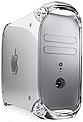 Sources confirmed to MacUser last week that Apple has lined up a range of speed-bumped Power Macs, including the first to use a 1GHz PowerPC processor. As we reported, Apple had originally set aside the provisional date of yesterday, 22 January, for the release of these machines, but we learned late last night that factors had conspired against this plan, and forced Apple to delay any announcement.
 Several observations can be made regarding the examined font types. First, no significant differences in reading efficiency were detected between the font types at any size. There were, however, significant differences in reading time. Generally, Times and Arial were read faster than Courier, Schoolbook, and Georgia. Fonts at the 12-point size were read faster than fonts at the 10-point size.