Patrick Schmid van Tom's Hardware Guide heeft zijn review van de Seagate Barracuda 180 op het net gemikt. Deze gigantische 7200rpm SCSI harddisk van 180GB bevat 12 platters á 15GB en neemt twee 3,5" bays in beslag. Het monster heeft verder een seektime van 7.4 ms en kan gebruik maken van 16MB cache. Met deze specs wint hij geen snelheidsrecords, maar in situaties waar grote hoeveelheden data betrouwbaar moet worden opgeslagen komt hij prima tot zijn recht, aldus onderstaande conclusie:
At a price of $ 1,999, the Barracuda 180 is certainly not targeted at average home or office use. Putting four 45 GB drives into an IDE RAID array will provide the same storage capacity and more performance at a better price point. However, this new drive targets a different market, namely one that demands capacity. Even though the drive may look expensive and also its performance doesn't seem particularly ground-breaking, I expect it to become successful simply because it offers more than twice the capacity than the largest drives available (73.4 GB). SCSI drives used to double their capacity with each new generation (9.1, 18.4, 36.7, 73.4 GB).
The next logical step would be 146 GB, which I expect to hit the market shortly as the remaining 73 GB drives at 1.5" height are replaced by 1" models. Therefore, Seagate's new drive provides more capacity than people would have for this generation, so the Barracuda 180 will be a boon to expanding server farms. Putting the new Barracuda into vast drive arrays will allow expansion of capacity at existing performance levels without much effort.
Bedankt Namoh voor de tip!
:strip_exif()/i/1023254557.jpg?f=thumbmedium)

 Op 13 juni 2001 is de federatie Nederland~ICT van start gegaan. Nederland~ICT is een samenwerkingsverband van vijf verenigingen: FENIT,
ICT Telecom, VIFKANTEC, ICT Milieu en Werkgeversvereniging ICT. Met een omzet van ruim 60 miljard gulden en 225.000 werknemers kan Nederland~ICT zich met recht de spreekbuis van de Nederlandse ICT-sector noemen.
Op 13 juni 2001 is de federatie Nederland~ICT van start gegaan. Nederland~ICT is een samenwerkingsverband van vijf verenigingen: FENIT,
ICT Telecom, VIFKANTEC, ICT Milieu en Werkgeversvereniging ICT. Met een omzet van ruim 60 miljard gulden en 225.000 werknemers kan Nederland~ICT zich met recht de spreekbuis van de Nederlandse ICT-sector noemen.
 1)
1) 2)
2) )
)
 The principal enhancement to the core architecture is a new six-stage superscalar processor pipeline, which supports clock rates of 600MHz in SoC devices manufactured in 0.13 micron process technology. The new core maintains key design characteristics from earlier versions of the Tricore architecture, including a focus on providing usable processor bandwidth through task switching efficiency, overall processor efficiency and a small die area for the core.
 Finally, Ditzel said Transmeta will offer a 256-bit core Crusoe next year - twice the size of today's 128-bit cores. A wee while back, we heard that said 256-bit part, codenamed Astro, will run at 1.4GHz while consuming only 0.5W. It is thought to contain 128KB of L1 cache and 2MB of on-die L2.
 Samen met haar resellers en andere genodigden, heeft ConnecTUX de eerste officiele versie van haar software gelanceerd. Voor deze gelegenheid was in Grand Hotel Karel V een lunch met aansluitend presentaties door ConnecTUX en IBM georganiseerd. Tenslotte werd door Hans Stellingsma (oprichter Microsoft Nederland) een inspirerende introductie voor de release gedaan, welke daarna met champagne en de nodige drankjes werd gevierd.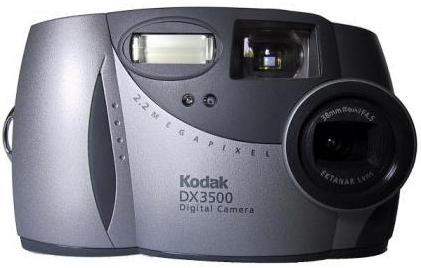
:strip_exif()/i/1031653478.jpg?f=thumbmedium)
 . Een klant die er alvast 500 wilde bestellen, kon 20% korting krijgen. Als je onderstaand ding thuis wilt ophangen, komt een stevige muur en wat sterke vrienden goed van pas, want het gewicht bedraagt ruim 68kg. En nee, daarmee wordt dus niet die dame bedoeld: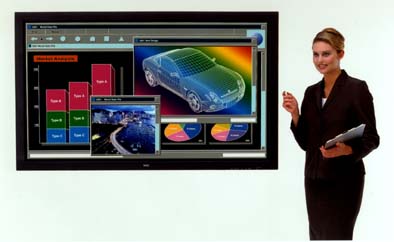
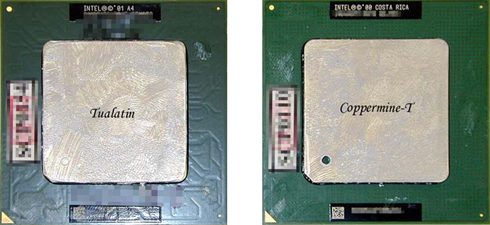
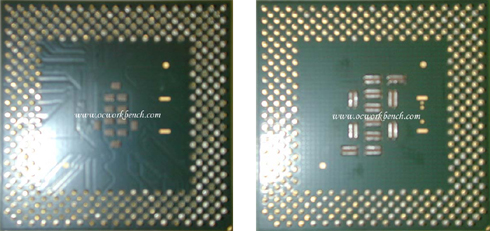
 1,13GHz Pentium III Tualatin Boxed: f 748,29
 In June, Intel will officially introduce Tualatin for notebook. The lowest speed shall be 1Ghz. Tualatin for notebook will also be renamed as Mobile Intel Pentium III Processor-M head-on with AMD Athlon 4. Brookdale-M will also be renamed as 845MP.