Op CIO Insight is te lezen dat een Amerikaanse professor, Dorothy Denning genaamd, een nieuw soort van authenticatie heeft uitgevonden waarbij op basis van GPS-gegevens gewerkt wordt. Op deze manier wordt de data die gecodeerd verstuurd wordt pas gedecodeerd op de plaats van bestemming. Een voorbeeld van deze toepassing is bijvoorbeeld een systeemadmin in een ziekenhuis die vertrouwelijke data van patiënten op een veilige manier naar andere plaatsen verstuurt. Er kan echter ook gedacht worden aan toepassingen op het gebied van het nakomen van copyright-overeenkomsten van onder andere muziek en video's. Ook het Pentagon heeft interesse getoond. Er zijn echter nog wel punten van kritiek op deze methode:
The idea has its share of critics: "The problem is making the encryption device and GPS receiver tamperproof," says Bruce Schneier, a fellow cryptographer. Denning agrees that "you'll never solve the security challenge completely." But she believes geo-encryption has seriously upped the ante in the brain race against hackers.
A year ago, Denning helped form GeoCodex, an Arlington, Va.-based start-up that's developing devices to enable location-based authentication. Working with Hollywood film executive Mark Seiler and MapQuest.com Inc. founder Barry Glick, the technology is already attracting interest: Even top White House officials, including the nation's top cyberterrorism cop, Richard Clarke, are looking into its potential uses against cyberwarriors.
Verwijderd meldde dit. Onze dank.
/i/1248683747.png?f=fpa)

 Ondanks de betere omzetontwikkeling van SiS blijft VIA in absolute termen twee keer zo groot als SiS. Het ontbreken van een officiële Pentium 4 chipset licentie en het recente succes van SiS in zowel de markt voor Pentium 4 als AMD chipsets, zijn duidelijk van negatieve invloed op het bedrijfsresultaat van VIA. Analisten zijn weinig hoopgevend over het tweede kwartaal, waarin de verkopen traditioneel afnemen. Mobofabrikanten hebben aangegeven dat de verkoop van Pentium 4 borden slechter is dan verwacht. De verwachtingen over het tweede kwartaal zijn daardoor ook voor SiS onzeker.
 "In about five years, we hope to have the first practical application of quantum information processing, which is brief but ultrasecure messaging," Walsworth said. "Because the information is quantum-mechanical, if it is measured in any way before it gets to you — if anybody tries to eavesdrop — the information will be destroyed, and you will not receive it. So if you get the information, then you can be sure it was not observed by anyone else." That has attracted the attention — and funding — of the Defense Advanced Research Projects Agency and the National Security Agency.
:strip_exif()/i/1134967182.gif?f=fpa)
 Directeur Kertzman van Liberate vertelde de rechter dat het bedrijf behoorlijk wat inkomsten is misgelopen door de deals van Microsoft, en dat hij vindt dat er een einde moet komen aan deze situaties. Hij was hiermee de tiende getuige van de negen staten die strengere maatregelen willen tegen de softwaregigant in het al lang lopende proces. Een voorbeeld van Telewest wordt gegeven, waarin Microsoft voor drie miljard dollar investeerde op voorwaarde dat de kabelaanbieder geen contracten met andere set-topaanbieders zou afsluiten.
 We have now discovered even more details about ATI's R300 graphics chip and can report that it is likely to be called the Radeon 10000. As we said last week, the chip will have eight pipelines and four texture units per pipe, significantly more than you get with the Radeon 8500 or Geforce 4 TI.
 SiS R658 chipset for the Pentium 4 is expected to be released in Q3. The SiSR658 is the first non-Intel RDRAM chipset to be released. The SiSR658 is expected to support 4i four-bank PC1066 RDRAM. The SiS 658 will feature a 1066MB/s link to the SiS 963 South Bridge which offers support for ATA133, 3 x IEEE1394 and 6 x USB2.0 ports.
:strip_exif()/i/1037180778.jpg?f=fpa)
 Dulaney says IBM is among the first of the major players in this market--which includes Oracle and Microsoft--to detail how it plans to add the growing number of wireless devices into its corporate software products. [...] But as more consumers and workers use cell phones and other handheld devices to connect to the Internet, the software makers are revamping their business strategies and parlaying their expertise to target the wireless industry.
 Speaking about AMD’s ongoing plans in terms of Duron promotion we should point out that the company is not going to fall behind Intel and in Q4 they will announce a new Duron 1900+. Then in Q1 ’03 we will see Duron 2000+. So far, AMD doesn’t plan to use 0.13micron SOI technology for its Duron processors.
 We gaan gewoon door en kunnen
 )
) 4)
4) 2)
2)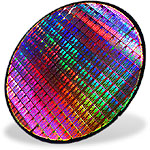 IBM, Sony, and Toshiba will play a major role in the alliance. Toshiba will provide its system-on-a-chip (SoC) and manufacturing expertise, while Sony will guide the technology efforts and leverage the processes for its consumer devices. IBM will leverage its pioneering work in SOI, copper, and low-k and could become a key foundry provider in the alliance.