Google roept zijn gebruikers op om mee te doen met Distributed Computing via Google Compute, een nieuw onderdeel van de Google Toolbar. Door samen een grote virtuele computer te vormen kan een zinvolle bijdrage geleverd worden aan wetenschappelijk onderzoek. Bij Distributed Computing wordt de zogenaamde 'idle time', de ongebruikte processortijd van je CPU, gebruikt als gebundelde rekenkracht voor grote projecten. Bekend zijn bijvoorbeeld Think (onderzoek voor kankerbestrijding), Seti (zoeken naar buitenaards leven) en Distributed.net (bijvoorbeeld het kraken van een RC-5 sleutel). Het eerste project waar je je rekenkracht via Google Compute aan kan doneren is het Folding@home project van de Stanford Universiteit. De onderzoekers van de universiteit hopen met de nieuwe kennis uiteindelijk medicijnen voor verschillende ziekten te kunnen ontwikkelen. Helaas is de onderstaande informatie alleen bereikbaar als je de Toolbar hebt geïnstalleerd:
Google would like to request your help on Google Compute, a new feature for the Google Toolbar. By turning on this feature, you can allow your computer to work on complex scientific problems when it would otherwise be idle. The work it does is automatically sent via the Internet to researchers who combine it with information sent by thousands of other users.
The first beneficiary of this effort is Folding@home, a non-profit academic research project at Stanford University that is trying to understand the structure of proteins so they can develop better treatments for a number of illnesses. In the future Google Compute may allow you to also donate your computing time to other carefully selected worthwhile endeavors, including projects to improve Google and its services.
The Google Compute feature of the Google Toolbar shouldn't affect your regular computing activities and you can easily disable it at any time for any reason.
To learn more about Google Compute before installing, please read our Frequently Asked Questions. In particular please read the parts on Privacy and Security, which you must read and accept if you decide to try Google Compute. If you do not own this computer please ensure that you have the permission of the owner/administrator before enabling this feature.
:strip_exif()/i/2000901140.jpeg?f=fpa)

:strip_exif()/i/1033066030.jpg?f=fpa)

:strip_exif()/i/1033878969.gif?f=fpa)
:strip_exif()/i/1037647899.gif?f=fpa)
 Linux, with its genetic ties to Unix, is likely to replace Unix servers, the study asserted.
  Hoewel een aankoopbewijs niet nodig is, de website al meer dan een maand online staat en de actie op diverse plaatsen is aangekondigd, hebben vooralsnog slechts 30.000 mensen zich ingeschreven. De limiet van 8,8 miljoen mensen die gesteld werd aan het aantal deelnemers, omdat het bedrag per persoon dan zodanig laag wordt dat uitkeren onrendabel is, zal dan ook naar alle waarschijnlijkheid niet gehaald worden. Mocht dat toch gebeuren, dan gaat het consumentendeel van de schikking naar publieke instellingen en non-profit organisaties om muziekprogramma's te promoten:
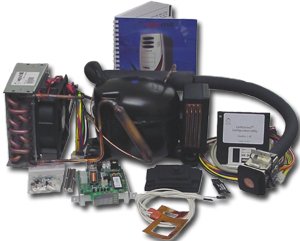
 Compared to the complete VapoChill CPU cooling systems the Stand-alone cooling units include, basically, all system components other than the VapoChill case itself. The three main system thus includes:
 "Assuming estimated net debt at its subsidiaries of approximately $3.225 billion... the implied equity value for the reorganized entity is $1.975 billion," UPC said. UPC is restructuring its debt mountain, hoping to escape financial collapse following an overly aggressive expansion. It has shifted its focus away from gaining new clients and rolling out expensive new services toward extracting more cash from current subscribers. It has also been aggressively cutting costs. UPC reiterated it expected to emerge from bankruptcy protection by the end of March. Its bondholders are scheduled to complete voting on the proposed restructuring by February 14.
 Microsoft "politely disagreed" with Santa Clara, Calif.-based iVast's claims. "Lowering and removing licensing barriers is not only great for the consumer electronics and software industries, but also offers consumers the benefits of better quality video at smaller file sizes" said Michael Aldridge, lead product manager for Windows Digital Media division at Microsoft. He cited the benefits of a potential personal video recorder that could store two times more TV programming than MPEG-4 using Windows Media 9 Series. "How are these benefits bad for consumers?" Still, the outcry is part of an intense war not only for customers on the PC but also for manufacturing cell phones, PDAs, DVDs and set-top boxes.
 The first company to access supercomputing power from IBM on demand is PGS Data Processing, a division of Petroleum Geo-Services, for an advanced seismic imaging project in the deep water of the Gulf of Mexico. "Seismic imaging services employ the latest numerically intensive applications, but are also highly cost competitive. PGS has been looking for a more flexible business model which addresses peak computing requirements, assures rapid response to our customers, but minimizes long term, incremental cost commitments to PGS," said Chris Usher, president of Global Data Processing.
  "DivXNetworks is a pioneer in enabling the delivery of DVD-quality digital video over the Internet, and we're excited to combine our cutting-edge video graphics card technology with their leading video compression technology," said Rick Bergman, Senior Vice President, Marketing and General Manager, Desktop, ATI Technologies Inc. "The synergy in harnessing the power of hardware and software will create higher visual quality, significantly faster playback time and a truly amazing digital video experience for consumers."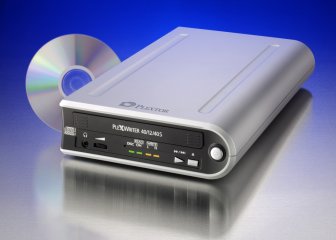
 Twee bevriende giganten - Intel en Microsoft - gaan samen werken aan een nieuw platform voor portable multimedia. De twee bedrijven maakten onlangs bekend een referentie-ontwerp te willen bouwen voor mobiele apparaten die omgaan met video, foto's en muziek in digitale vorm. De Portable Media Player (PMP) zal gebruik maken van een speciale versie van Windows CE .NET, die Media2Go is gedoopt. De hardware is - niet geheel onverwacht - gebouwd rond Intel's XScale embedded processor. De videowalkman gaat gebruik maken van een USB 2.0-verbinding om te communiceren met pc's en later digitale videoapparatuur. Het ding moet echter klein genoeg zijn om in een binnenzak kwijt te kunnen. Samsung en Viewsonic hebben al bekend gemaakt dat ze PMP's willen gaan bouwen. Lees meer op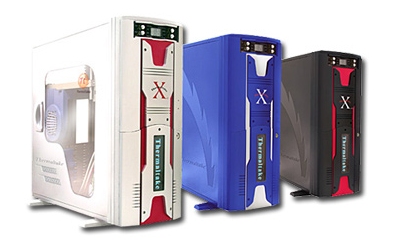
:strip_exif()/i/1311316336.gif?f=fpa)