NTT DoCoMo heeft vandaag een pressrelease op het net geslingerd waarin informatie wordt gegeven over 4G (4e Generatie) mobiel internet. Het bedrijf is van plan zo snel mogelijk een testproject op te starten. 4G moet een bandbreedte gaan leveren van meer dan 100Mbit/s down- en 20Mbit/s upstream. Ondanks de vooruitstrevende houding van het bedrijf, verwacht het toch pas in 2010 een commerciële dienst gebaseerd op 4G te introduceren. Dit lijkt laat, maar er zijn nog een aantal grote problemen te overwinnen voordat 4G geïntroduceerd zal kunnen worden. Zo is een probleem met de enorme capaciteit van de dienst de bandbreedte van 100MHz die nodig zal zijn. Bij zo'n grote bandbreedte kan het signaal zichzelf gaan storen na reflectie op bergen, gebouwen enz.:
A 4G wireless system offering high-speed transmission of large-capacity data requires a bandwidth of approximately 100 MHz. When using a channel with such a broad bandwidth, however, transmission quality can be impaired by multipath, the occurrence of a large number of secondary signals reflected off buildings, mountains and other surrounding objects. NTT DoCoMo's experimental 4G system employs variable spreading factor (VSF) and orthogonal frequency code division multiplexing (OFCDM) technologies to mitigate the impact of severe multipath interference and thereby achieve a broad-bandwidth, large-capacity wireless system available on a nationwide basis.

:strip_exif()/i/1051861590.jpg?f=fpa)

 From a strategic point of view, it is advisable to improve the user-friendliness of video editing software, because including it in professional applications like Adobe Premiere or Pinnacle Studio will not help it capture the mass market. Those who just want to quickly edit a DV tape from the digicam and send it, or those who want to copy several DVDs onto CD-ROMs must suffer through relatively difficult-to-use programs. That means they have to do complicated calculations of data rates in order to compress a DVD so that it will take full advantage of the capacity of a CD-R. If DivX Networks manages to reach a broad segment with simple pack-and-go tools, the company itself could profit with a victory march.
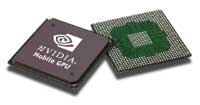 nVidia is also making a separate version of the GeForce4 Go without the discreet packaging which uses standard external memory chips, which are used in notebooks with the GeForce2Go. These separate graphics chips will most likely cost a little less, and not perform exactly the same as their discreet brethren, but still should give performance better than other mobile graphics chips currently on the market.
 .
. 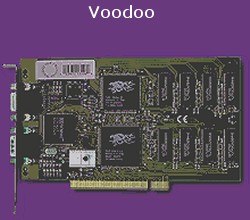 The Voodoo boards were unique in their design having been targeted solely for 3D games and incorporated no 2D capability whatsoever. These cards simply switched the output from a second card over to their own whenever a suitable application was run. Many in the industry, including Microsoft, doubted whether people would be prepared to pay the projected 500US$ price tag simply to improve their gaming experience. Whether this belief was founded was never proven because in the spring of 1996 the price of computer memory crashed and the first Voodoo boards eventually retailed at the more agreeable price of 300US$.

:strip_exif()/i/2004788250.jpeg?f=fpa)
/i/1390572957.png?f=fpa)
/i/1321340963.png?f=fpa)

 )
) 2)
2) 4)
4)


 This comparison between the two workstation platforms from AMD and Intel clearly shows that dual operation does not necessarily mean increased speed for all applications. Rather, you need software that has been specially adapted to multiprocessor operation, so that the load is equally distributed between the two CPUs. With its Athlon MP 2000+, AMD has added a high-performance processor to its portfolio. And what's more - it certainly holds its own against the Intel Xeon 2200.
:strip_exif()/i/1024591360.jpg?f=thumbmedium)
:fill(white):strip_exif()/i/2000832134.jpeg?f=thumbmedium)
:strip_exif()/i/1021297101.jpg?f=thumbmedium)
 So, do you save up for NVIDIA's latest or go with ATI's more wallet-friendly alternative? If you've got a 17" monitor or smaller (meaning you probably max out at 1280x1024 resolution), then ATI's Radeon 8500 is probably the better choice. The majority of players still play at 1024x768 or lower resolutions, and from this standpoint, the cards are very comparable, especially considering the price difference.


 For the library, the only license requirement is that a copyright notice be included in the program source-code, if released. Microsoft, which rarely releases source code, didn't need to include the string in the company's programs, but zlib creator Gailly wishes the giant gave credit.
 Venture firms and investment banks that fund 40-Gbit startups are following the "deliberate Ponzi schemes" promoted during the Internet boom, CIMI's Nolle said: If your payoff date is so far in the future as to be inconsequential in the short term, you can fund a startup without being concerned about whether it makes it to IPO or acquisition.