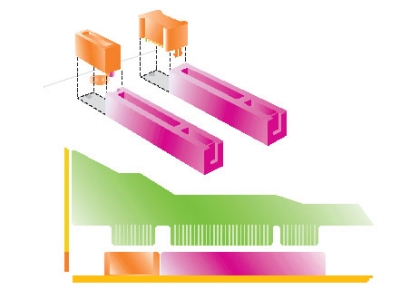
PCStats heeft een artikel online gezet waarin haarfijn wordt uitgelegd wat PCI Express (voorheen 3GIO) is, hoe het kan worden gebruikt, en wat de voordelen van deze nieuwe I/O-standaard zijn. Uitgelegd wordt dat PCI Express een evolutie van de huidige PCI standaard is, waardoor volledige terugwaardse compatibiliteit gewaarborgd blijft. De standaard werkt met seriële verbindingen, die ervoor zorgen dat de bestaande 32-pins PCI-sloten vervangen zouden kunnen worden door 4-pins PCI Express-sloten. De eerste PCI-Express enabled moederborden zullen waarschijnlijk voorzien zijn van standaard PCI-sloten met per PCI-slot een klein uitbreidingsslot voor PCI-Express kaarten.
The current specifics allow for an additional header placed at the end of a standard PCI slot to support lower bandwidth (1-2 lane) 3GIO devices, somewhat similar to the extra connector used for 66mhz PCI devices. This is the most likely scenario for the first generation of PCI Express motherboards. This feature combined with full software support will allow for a seamless integration with older PCI technology. The PCI 2.2 bus will be present to interface with PCI expansion cards and then will be linked via a 3GIO connection to the main I/O. No doubt an altogether new connector will also be developed for high-bandwidth devices that need several 3GIO lanes.
Voor nog veel meer interessante informatie over deze nieuwe standaard, zie het originele artikel bij PCStats.
Verwijderd wist waar het nieuws te vinden was.


 )
) 5)
5) 3)
3)
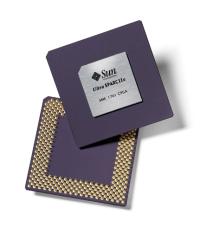 Presentations given by Sun executives emphasize the company's ambitious plans for the blades, which have so far been pitched by vendors at service providers and web services. Sun's blades will be pitched at distributed and parallel scientific computing environments, such as gene splicing.
 Security concerns about instant messaging and the fact that it is not that easy to save the messages has held back its use in corporations. Gene Munster, analyst at US Bancorp Piper Jaffray, was skeptical of the need or demand for encrypted instant messaging, noting that encrypted e-mail isn't even all that common and that AIM is free.
 In Noorwegen is de 'wax-kiezer' al een feit. Skiërs ontvangen per sms-je advies over het beste type wax voor onder de ski's.
:strip_exif()/i/1021101755.jpg?f=thumbmedium)
 Insufficient yields, due to the complexity of the RF components involved in the CMOS process, have prevented 802.11a from becoming cost-competitive with 802.11b, according to analysts. Atheros, for example, is finding it difficult to offer 802.11a chipsets for less than $43, while 802.11b chipsets currently cost $30 a unit and are falling in price, IDC's Furer said.
 Sony heeft de koeling van de nieuwste generatie Vaio notebooks uitgerust met een heatpipe. In de heatpipe is een vloeistof aanwezig welk verdampt en daardoor warmte opneemt bij de processor. Vervolgens condenseert de vloeistof bij een heatsink waarbij de warmte-energie weer wordt afgestaan. Het apparaat is slechts 8,5mm dik wat 40 procent dunner is dan conventionele modellen.