Client Server News heeft een erg interessant artikeltje gepost over de problemen rond de ontwikkeling van de Intel Itanium. Volgens hun informatie zijn de snelste Itanium testsystemen, die aan developers zijn geleverd, nog steeds gebaseerd op A-steppings met een maximale kloksnelheid van 600MHz en een single-pumped 100MHz bus. Intel introduceert normaal gesproken alleen processors die de B-stepping hebben bereikt. Het is de bedoeling dat de Itanium dit kwartaal wordt gereleased op een kloksnelheid van 733MHz met een 133MHz DDR bus, maar het twijfelachtig of dit haalbaar is.
Ook wat betreft IA-64 software lopen de ontwikkelingen niet soepeltjes. Microsoft kan op dit moment uitsluitend een preview versie van IA-64 Windows 2000 bieden en volgens ingewijden is de uiteindelijke versie niet op tijd klaar voor de release van de Itanium. Linux doet 't wel, maar de ontwikkeling van een IA-64 GCC compiler loopt spaak. Dit is geen klein probleem, aangezien IA-64 performance extreem afhankelijk is van de kwaliteit van de compiler:
Here it is two weeks into the second half of 2000, when Intel is publicly committed to delivering the first Itanium systems, the culmination of six or eight years of heroic effort to produce Intel's first 64-bit processor, a project designed to make its reputation and secure its future, and the chip still isn't baked and its chief operating system, NT64, is still in pretty scruffy shape. In fact, Intel now admits, when asked, that it doesn't expect NT64 to be production-grade until the first quarter of next year, an appreciation of the situation that jibes with other, earlier reports claiming NT64 won't be ready on time.
[...] The Itanium, by all reports, still isn't yielding the 733MHz and 800MHz speeds it's supposed to when it's introduced. Ditto the 133MHz double-pumped bus it's supposed to have. Development systems marked 133MHz don't appear to be the real McCoy but merely 100MHz single-pumped buses. The best chip Intel has been able to put in those development systems to date is a 600MHz, but mostly they've been 500s. None of the 1,500 development systems Intel has sent to IHVs or ISVs so far has a B-step processor in it. The best have been A-3s, and it's pretty late in the day for A-3s.
[...] Itanium development has taken so long that there's not a single OEM left doing its own Itanium two-way or four-way workstations or servers. They all got so sick and tired of waiting for the chip to arrive they chucked internal development. Anything fielded, aside from the rare Itanium eight-way or the Unisys 16/32-by, will be re-branded Intel widgetry.
 |

 Widexs bestaat inmiddels 4œ jaar en heeft sinds die tijd een ononderbroken groei gekend. We hebben ons in die tijd ontwikkeld tot een erkend specialist op het gebied van webhosting, webhousing, dedicated servers en co-location. Widexs beschikt over een steeds groeiende klantenkring, waaronder KLM, NS, Nutricia,enz....

 De Hercules 3D Prophet II MX: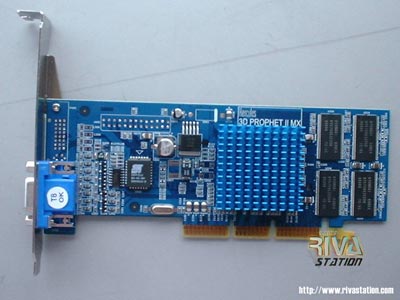
 With all it has going for it, the Radeon most definitely still has some problems. By far the biggest let down of the Radeon 64MB DDR is its poor 16-bit performance. ATI argues that people are really not playing in 16-bit anymore, and this could very well be the case for many out there, however it would be nice to know that if you need it, 16-bit performance is there. Radeon owners will most likely find themselves always running in 32-bit color primarily as a result of the poor 16-bit rendering. This is fortunate due to the fact that the Radeon's 16-bit speed is essentially the same as its 32-bit speed.
 July 17, 2000 -Maxtor Corp. (NASDAQ:MXTR) today established a new world's record in hard drive
capacity with its new 80 GB drive, the DiamondMax 80. Available in August 2000, the DiamondMax 80 IDE hard drive is ideal
for storage-intensive applications that require high-capacity and fast transfer rates in personal computer (PC) systems, and for
consumer electronics and network attached storage (NAS) systems.
July 17, 2000 -Maxtor Corp. (NASDAQ:MXTR) today established a new world's record in hard drive
capacity with its new 80 GB drive, the DiamondMax 80. Available in August 2000, the DiamondMax 80 IDE hard drive is ideal
for storage-intensive applications that require high-capacity and fast transfer rates in personal computer (PC) systems, and for
consumer electronics and network attached storage (NAS) systems.
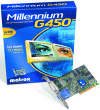 1 - The Millennium G450 products are expected to being shipping to system integrators
starting near the end of August. Full retail products should begin shipping near October.
1 - The Millennium G450 products are expected to being shipping to system integrators
starting near the end of August. Full retail products should begin shipping near October.
 1) 814.520
  1) 785.300
  0) 544.628