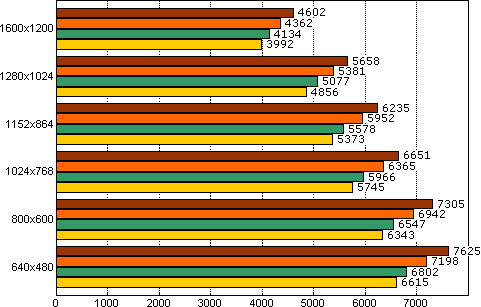
Bij Xbit zegt men over nadere informatie te beschikken, dat Intel nog deze week de nieuwe Pentium III Tualatin processor zal aankondigen; op 19 juni om precies te zijn. De op 0,13 micron geproduceerde CPU zal eerst in server-versies uitkomen op 1,13GHz. Ook over de komst van de andere Intel processoren deze zomer, weet men het een en ander te melden:
19 June: This day will be a turning point for Pentium III. On this day Intel is going to announce its first CPU based on 0.13micron Tualatin core. However, the first Tualatin will be aimed at the server market only and is most likely to feature 256KB or 512KB L2 cache. The first Tualatin announced will work at 1.13GHz.

 |
Intel komt dus eerst met de duurder geprijsde en om minder grote aantallen vragende server-versie, daarna met de mobile versie en tenslotte moet in augustus het 0,13 micron proces op dreef zijn, om de desktop Tualatins in volumes van de productielijnen te kunnen laten rollen. Ook is deze volgorde mogelijkerwijs een marketing-overweging, om de P4 niet teveel in de weg te lopen, voordat deze zelf ook op 0,13 micron uitkomt.
 Update: Volgens The Inquirer heeft Intel bevestigd dat het vandaag, 19 juni, de Tualatin server-versie uit zal brengen op 1,13GHz. Volgens The Inquirer met 256KB cache, volgens Xbit Laboratories echter met 512KB cache. Op 6 augustus zal nog een 1,26GHz server Tualatin volgen. Tevens werd bevestigd dat alleen de server uitvoering (waarschijnlijk Xeon genaamd -JL) dual-processor support biedt. SMP wordt dus waarschijnlijk gedisabled in de mobile en desktop Tualatins. Hierdoor zal de Tualatin in dual-processor opstelling geen interne concurrentie vormen voor dual Foster (P4 Xeon) systemen.

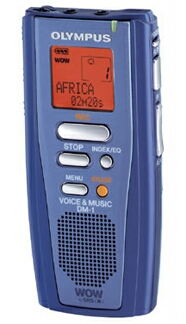 Olympus thinks its new DM-1 will move more business users into MP3 addiction. The gadget is a combination digital voice recorder/MP3 player that the company says is “geared for consumers and corporate road warriors, as well as students, journalists, doctors, and lawyers.” The DM-1 supports removable SmartMedia cards for up to 22 hours of voice recording time or over an hour of MP3 or WMA music recording time on a 64MB SmartMedia card. It comes with a 64MB card, but is compatible with cards up to 128MB. The recorder’s MP3 player has a built-in WOW sound system from SRS Labs and a five-setting equalizer. Downloading speech files to a PC can be accomplished via the included USB cable or via SmartMedia download devices.
:strip_exif()/i/991786184.jpg?f=thumbmedium)
 Quadro2 graphics solutions feature NVIDIA's unified driver architecture (UDA), which allows forward-and-backward as well as top-to-bottom compatibility, greatly reducing support costs by simplifying system maintenance. With UDA technology, NVIDIA’s optimizations for the Intel Itanium processor also benefit NVIDIA’s popular Quadro family of workstation solutions. UDA is found only in NVIDIA technologies. The Quadro2’s power is unleashed by NVIDIA’s series of custom application drivers featuring key enhancements vital to graphics professionals, including the ELSA® MAXtreme™ driver for 3ds max™, the ELSA POWERdraft™ driver for AutoCAD™ and the QuadroView™ driver for professional MCAD 3D visualization. Quadro2 solutions provide a single "develop and deploy" platform for workstation professionals, ensuring content developed using a Quadro2 solution will also run on other popular consumer graphics solutions utilizing NVIDIA chipsets.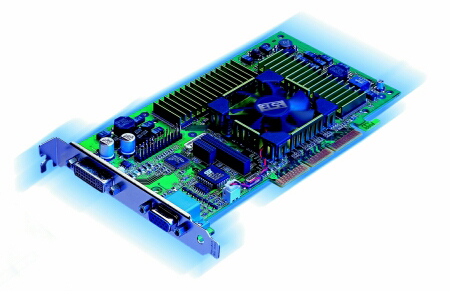
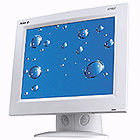 That has left these and other manufacturers with excess stock of the LCD panels, which are used not only in dedicated screens for PCs, but also in notebook computers.
:strip_exif()/i/1015424833.jpg?f=thumbmedium)
:fill(white):strip_exif()/i/2000761776.jpeg?f=thumbmedium)