Tip de redactie

Zes Dual CPU moederborden getest @ THG

Door Tweakers , 1 juli 2001 19:3830 reacties, bron: Tom's Hardware Guide

Bij Tom's Hardware Guide is onlangs een roundup verschenen van zes dual CPU moederborden. In deze test is alleen de VIA Apollo Pro133A chipset vertegenwoordigd, die gepaard met een setje P3's voor weinig geld toch een relatief hoge performance kan laten zien. De goedkoopste plank (de Gigabyte GA-6VXDC7) was $125, de duurste was $200 (Asus CUV4X-D).

Elke setup werd getest onder Quake III Arena, Sysmark 2000, Cinema 4D XL R6 en 3DStudioMax R3. Onderlinge verschillen waren in de meeste gevallen niet erg groot, waardoor de prijs zwaarder mee ging tellen. De Gigabyte GA-6VXDC7 wordt uiteindelijk vanwege de beste prijs/prestatie-verhouding als winnaar bekroond:

Of all the boards we tested, all of which came furnished with the VIA Apollo Pro 133A chipset, the Gigabyte GA-6VXDC7 was the best compromise. It costs a mere $110, hardly more than a single-CPU board, all the while performing well in both CPU modes. The fact that the Intel Pentium III is no longer the 600-pound gorilla in the market is obvious.

We've shown that reasonably priced dual systems based on inexpensive boards with a VIA chipset can be specifically assembled for semi-professional use. Whether a VIA chipset is acceptable in this market segment or not - that's another question, with an answer that opens another can of worms. In the end-customer market, some users are awaiting boards supplied with an AMD 760MP chipset, which is currently not available for less than $750. Anyone on the lookout for economical dual processing won't be able to do without the models we tested here. It goes without saying that the Intel Pentium III is no longer one of the fastest processors on the market these days.

On the other hand, it ought to be mentioned that VIA doesn't wring optimal performance from the Pentium III. Its incredibly low memory transfer performance has been well-known for some time now. Nevertheless, the chipset can be had for a song, in contrast to the Intel 815E, Intel 850 or even the AMD 760MP. For a bit more performance, the competition demands substantially more money, which makes for a hefty price tag on the motherboard.

Voor de complete roundup volg je deze link.

Reacties (30)


Ace's Hardware over Pentium 4 FPU performance

Door Hielko van der Hoorn, 1 juli 2001 17:1737 reacties, bron: Ace's Hardware

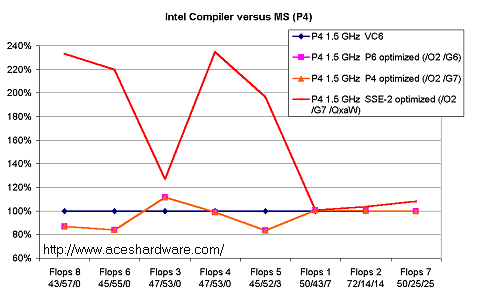
Tijgerrr wees ons erop dat er bij Ace’s Hardware een bijzonder interessant artikel verschenen is over de FPU performance van de Pentium 4 met verschillende compilers. De Pentium 4 wordt door Ace’s Hardware getest met Microsoft’s Visual C++ 5.0, 6.0 en 7.0. De eerste twee versies zijn geoptimaliseerd voor de Pentium 3 waar Visual C++ 7.0 ook geoptimaliseerde executables kan afleveren voor de Pentium 4.

Veel blijkt dit echter niet uit te maken. De Pentium 4 geoptimaliseerde executable blijkt slechts 10 procent sneller te zijn dan de niet geoptimaliseerde versie. De Intel C++ compiler die simpelweg als plug-in te gebruiken is in Visual C++ blijkt gelukkig beter te presteren. Zodra de compiler het groene licht krijgt om sommige instructies automatisch om te laten zetten naar SSE-2 bewerkingen schiet de performance omhoog. In sommige benchmarks gaat de performance zelfs met meer dan een factor 2,2 omhoog! Een knap staaltje werk dus van de Intel mannen:

Intel has cut a corner too much while designing the Pentium 4 x87 FPU. However, Intel has a brilliant compiler team, which has developed the first IA-32 compiler that can optimize programs with SSE-2 instructions by simply recompiling the code. This makes the Pentium 4 much more attractive for many markets. Provided that a few bugs are resolved, the Pentium 4 will become an attractive option for the scientific world, where recompilation of code is very common and done on a regular basis. The Pentium 4 will most likely also become a powerful workhorse for the workstation world, as the Maya benchmark shows.

Thanks to this new compiler and higher clockspeeds, the fastest Pentium 4 should be able to decrease or even close the performance gap with the fastest Athlon in Pentium 4 optimized workstation applications. The Pentium 4 might even increase its performance advantage over the Athlon in some streaming applications (video encoding).
Pentium 4 FPU benchmarks

Reacties (37)


Radeon nu ook in 64MB SDRAM uitvoering

Door René van der Veen, 1 juli 2001 15:4922 reacties, bron: ATi

ATi heeft hun assortiment uitgebreid met een 64MB SDRAM versie van de Radeon. De kaart moet het gat op gaan vullen tussen de goedkopere 32MB SDRAM versie en de kaart welke met DDR geheugen is uitgerust. De kaart heeft een adviesprijs van 129 dollar wat in Nederland neerkomt op ongeveer 325 gulden. In eerste instantie vinden we alleen een versie zonder TV-Out terug, verder is de kaart identiek aan de 32MB SDR Radeon:

ATi Radeon logo (klein) Experience the excitement of 64MB of 3D graphics power. The RADEON™ 64MB graphics board features rapid 32-bit color 3D graphics, advanced 3D technology and robust T&L engine for graphic realism. Supporting all of the latest 3D games, the RADEON 64MB includes Hyper™ Z technology with Flicker free refresh rates up to 200Hz and 64MB of SDR memory. [break]Xbitlabs meldt ook nog dat in Japan de eerste Radeon’s van VGA No1 worden aangeboden. VGA No1 is een dochteronderneming van Powercolor welke nu dus videokaarten fabriceert met een Radeon chipset. In eerste instantie gaat het om de 32MB SDRAM versie later gevolgt door de bovenstaande 64MB uitvoering:[/break] The first company other than ATI to introduce ATI RADEON based graphics cards with SDR memory appeared VGA No1, daughter branch of PowerColor. As is known, PowerColor is now dealing only with NVIDIA based graphics cards, while the products based on chips from other manufacturers, such as Kyro and Kyro II, and now also RADEON, are within the responsibility of VGA No1. The card from VGA No1 with 32MB SDR SDRAM and a DVI-Out, which appeared today in Japanese stores, costs around $100-$110. Besides, in the nearest future there should also appear some models without the DVI-Out and equipped with 64MB SDR SDRAM.
Reacties (22)


Labtec 2.1 speakersets review @ Hardwareinfo.net

Door Tweakers , 1 juli 2001 10:1938 reacties, bron: Hardwareinfo.net

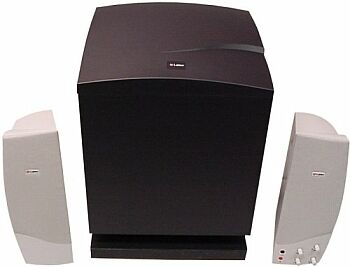
psygho schrijft dat er bij Hardwareinfo.net een review is neergestraald van de Labtec Pulse-424 en APX-4620. Beide speakersetjes bestaan uit een subwoofer en 2 satellites en kosten respectievelijk Fl. 149,- en Fl. 329,-. De APX-4620 dankt zijn hoge prijs o.a. aan de grotere subwoofer waar 5 versterkers in verwerkt zijn voor 70W RMS vermogen. De grote witte satellieten zijn opgebouwd uit twee midrange-drivers en een tweeter en produceren volgens te reviewer een prima geluid.

Over de Pulse-424, die zoals gezegd meer dan de helft goedkoper is, bleek echter ook bar weinig te klagen:

Met deze twee producten biedt Labtec de bezitter van de oudere soundcards de mogelijkheid de geluidskwaliteit op een goed niveau te brengen; zelfs een oude Soundblaster 16 klinkt nog indrukkwekkend met deze speakers. Met een adviesprijs van Fl. 149,-- is de Pulse-424 zeker betaalbaar en een aanrader voor de mensen die een stereo speakerset nodig hebben, maar Fl. 329,-- voor de APX-4620 is helaas niet echt goedkoop te noemen, maar dat is dan ook het enige echte nadeel wat wij konden ontdekken aan deze speakerset.
Labtec APX-4620
Labtec APX-4620

Reacties (38)


Details over warmte-afgifte Pentium III-M

Door Jack Leenders, 1 juli 2001 02:0434 reacties, bron: Xbit Laboratories

Xbit Laboratories heeft wat info gevonden over de heat-dissipation van de nieuwe mobile Tualatin, de Intel Pentium III-M. Hieruit blijkt o.a. dat de vermindering in de gemiddelde warmte-afgifte, door de overstap van 0,18 naar 0,13micron cores, weliswaar duidelijk is, maar niet zo groot is als men zou kunnen verwachten. Dit laat zich verklaren door het feit dat de Pentium III-M's meer transistoren en een twee maal zo grote L2 cache bevatten, dan de normale mobile Pentium III CPU's. Toch scoort de mobile Tualatin nog steeds beter qua warmte-afgifte dan de mobile Athlon 4. Een 1GHz mobile Athlon 4 verbrandt 24W, waar zelfs een op 1,26GHz geklokte Pentium III-M het tot 20W beperkt. Tevens blijkt dat de mobile Pentium 4, die in het eerste kwartaal van volgend jaar uitkomt, door hun warmte-afgifte alleen in de high-performance notebooks toegepast kunnen worden, waar warmte-afgifte en stroomverbruik een minder belangrijke rol spelen. Een 1,6GHz mobile Pentium 4 zou op 30W uitkomen:

Tualatin kleinThe appearing fresh info on the new Tualatin processor core reveals pretty curious facts about its architecture, highs and lows. Theoretically when the manufacturer moves its core to a new manufacturing technology (for instance, from 0.18micron to 0.13micron) it allows reducing the heat dissipation by well over 30% and to increase the top supported frequency by 1.5 times. However, in case of Tualatin CPU, things turned out far from this theory.

[...] Although the mobile Tualatin can’t please us with its low heat dissipation, its will still look a bit more attractive than the new mobile Athlon 4. Take for instance, 1GHz mobile Athlon 4. Its TPD will make around 24W, which is even higher than that of a Pentium III-M 1.26GHz.

Technology Mobile CPU Vcore, V TDP*, W SpeedStep, power saving mode
Frequency, MHz Vcore, V TDP*, W
0.13 micron Pentium 4 1.6GHz 1.3 30 1000? 1.1? 15
Pentium III-M 1.26GHz 1.35 (1.4) 20 (25) 800 1.15 9.6
Pentium III-M LV 866 1.15 (1.2) 10 (12) 533 1.05 6.1
Pentium III-M ULV 700 1.1 7 300 0.95 3.1
0.18 micron Pentium III 1GHz 1.7 25 700 1.35 11.2
Pentium III 850 1.6 18.2 700 1.35 10.2
Pentium III LV 750 1.35 12.4 500 1.1 5
Pentium III ULV 600 1.1 (1.15) 6.4 (7) 300 0.975 2.4
*TPD (Thermal Design Power) – typical heat dissipation during the regular work of the CPU with common applications.

Reacties (34)


Draagbare PC met Wearable Halfkeyboard

Door Jack Leenders, 1 juli 2001 00:0653 reacties, bron: Matias Corporation

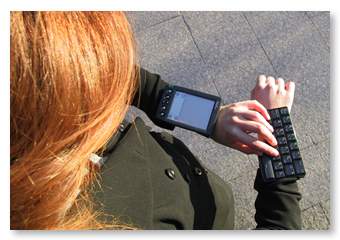
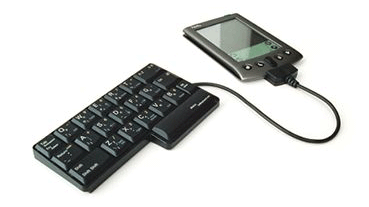
De Halfkeyboard is een product wat al langer op de markt is, maar nu is de eerder beloofde draagbare kit ook uitgebracht. Matias Corporation heeft hun Halfkeyboard voorzien van een set polsbanden, een kabel en software voor een Palm, Handspring of PC. Nu kun je dus, naast je Palm tegelijkertijd bedienen met de Halfkeyboard en stylus, het geheel ook om je beide polsen dragen, zodat het een draagbare PC wordt. De bijgeleverde software maakt het mogelijk het beeld op je PDA te roteren, zodat het scherm beter afleesbaar is wanneer je het draagt. Hier kun je lezen hoe het werkt. De kit is bedoeld voor iedereen die een ruimtebesparende oplossing zoekt en Matias Corp. belooft dat het gemakkelijk en snel aan te leren is om het toetsenbordje met één hand te bedienen, zodat de andere hand vrij is voor andere handelingen. De Wearable Halfkeyboard kit kost 299 dollar (zonder Palm ):

Wearable HalfKeyboard
Turn your Palm into a wearable computer!

For remote data collection applications, nothing is faster. Other wearable systems cost thousands of dollars more and require complicated and expensive support equipment.

Available for Palm™ III, V, VII Series, Handspring™, PC (Windows™ and Linux).
Halfkeyboard plus Palm

Ook BlackTiger had dit bericht gezien en aan ons gemeld.

Reacties (53)