De Franse website INpact-Hardware bericht dat VIA's 'oude' P4X400 chipset nu al Intels nieuwe HyperThreading technologie ondersteunt. De schrijver van het korte stukje maakte gebruik van een HyperThreading-ondersteunende Pentium 4 3,06GHz op een Shuttle AV49N-moederbord, die gebaseerd is op de P4X400. Tot zijn verbazing zag hij dat Windows XP de Pentium 4 als twee processors herkende, hetgeen erop wijst dat de feature actief is. Een snelle blik in het BIOS wees volgens hem uit dat de functie daar in- en uitgeschakeld kon worden. De website merkt op dat dit in strijd is met VIA's eerdere aankondigingen, waar steeds werd gemeld dat HyperThreading pas vanaf de P4X400A (later omgedoopt tot de P4T400) ondersteund zou worden. Geconcludeerd wordt dat er twee verklaringen kunnen zijn. Allereerst zou VIA de P4T400 stilletjes P4X400 genoemd kunnen hebben en deze op recente moederborden gemonteerd hebben. De tweede, meer waarschijnlijke mogelijkheid is dat de P4X400 hardwarematig al HT ondersteunt en dat het afhankelijk van het BIOS is of de functie beschikbaar is op het betreffende moederbord. De claim van de Fransman blijft tot op heden onbevestigd. Intel noch Shuttle heeft vooralsnog gereageerd op het bericht, waardoor het 'bewijs' beperkt blijft tot een screenshot:


 "Early indications are that it's being well received by the customer, the new technology is performing well, and it is saving both time and money," said Gary Huddleston, manager of consumer affairs for Kroger's Southwest division. The company has been testing finger imaging in the Texas towns of Bryan and College Station for about nine months. About 10,000 customers are currently participating. Students from nearby Texas A&M University have been particularly receptive, as have "surprisingly, many of our seniors," Huddleston said.
 Along with the legal compliant, VIA delivered documents that it said listed Intel's unreasonable technology licensing requirements and anticompetitive actions towards downstream hardware manufacturers, sources said.
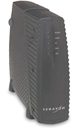 The new international standard is a key to unleashing the significant bandwidth available in cable systems, and is backward compatible with previous versions of the DOCSIS . Furthermore, as is true with the previous version of the specification (ITU-T Rec. J.112, also known as DOCSIS 1.1), the new standard can be used as the foundation upon which IPCablecom IP-communication/telephony services can be offered. The standardization is remarkable due to the fact that work on the specification began less than 18 months ago. The rapid standardization is important to promoting worldwide adoption of this important technology.
 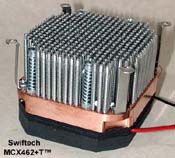 I do believe Swiftech got it right with this HSF. You can pretty much guarantee that it will give you at the very least a 50-100mhz increase in overall speed over any heatsink on the market that doesn't use a peltier. The key points to consider are the power requirements and the extra heat it will put onto your system components. If I were using the heatsink under normal everyday conditions, some kind of duct should be fabricated to insure that the ambient air around the HSF doesn't enter the system.
/i/1209996512.png?f=fpa)