ZDNet heeft een interessant artikel geschreven over een discussie tijdens de Computers Freedom & Privacy Conference waarin makers van grote informatienetwerken zoals Microsoft tegenover privacyadvocaten stonden. Jaston Catlett, voorzitter van een privacyadvocaten groep, waarschuwde voor de controle die bijvoorbeeld de overheid kan uitvoeren over netwerken zoals die van Microsofts Passport service. Volgens hem zou dit in de toekomst met betrekking op de gebeurtenissen van elf september alleen maar erger worden.
Microsofts vice-president van het .Net Core Service Platform, Brian Arbogast, zette de contra-attaque in door te stellen dat door middel van informatietechnologie de privacy van gebruikers juist toe kan nemen. Dit doordat iedereen zelf kan bepalen hoeveel informatie men wil vrijgeven in ruil voor service. Volgens Arbogast zal Microsoft er alles aan doen om veilige diensten neer te kunnen zetten:
Arbogast countered jabs from the audience about Microsoft's insecure products. "We're going to do everything we can to make (our products) secure," he said. However, he conceded that "you're never going to have me or other people say you can guarantee security, because you can't."
Audience members also wanted to know what Microsoft would do with its databases if law enforcement officials were to ask for the data, requests that are increasing in a post-Sept. 11 era. Arbogast warned that consumers should be careful before they reveal personal information because "any data that's held by any corporation is subject to subpoena."
:strip_exif()/i/1128186227.jpg?f=fpa)


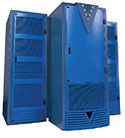 A Japanese laboratory has built the world's fastest computer, one with the computing power of the 20 fastest U.S. computers combined, The New York Times reported on Saturday.
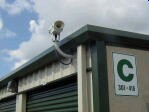 It will hopefully increase efficiency and safety on the London Underground by predicting crowd flow, congestion patterns and potential suicides on the London Underground.
The software has already been tested at London's Liverpool Street Station.
Dr Velastin says some people are put off public transport because they don't feel safe.
But he said: "The idea is that the computer detects a potential event and shows it to the operator, who then decides what to do - so we are still a long way off from machines replacing humans."
It will hopefully increase efficiency and safety on the London Underground by predicting crowd flow, congestion patterns and potential suicides on the London Underground.
The software has already been tested at London's Liverpool Street Station.
Dr Velastin says some people are put off public transport because they don't feel safe.
But he said: "The idea is that the computer detects a potential event and shows it to the operator, who then decides what to do - so we are still a long way off from machines replacing humans."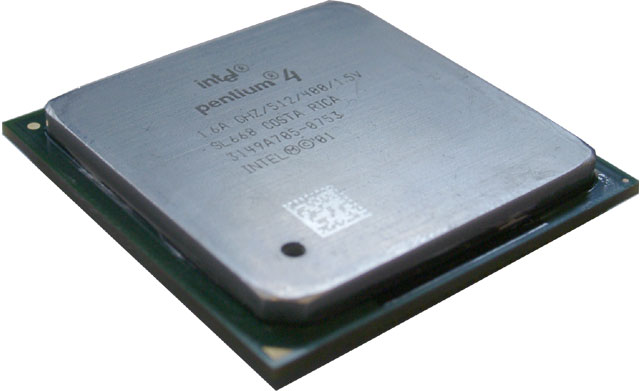
 :
:
:strip_exif()/i/1019768446.jpg?f=thumbmedium)
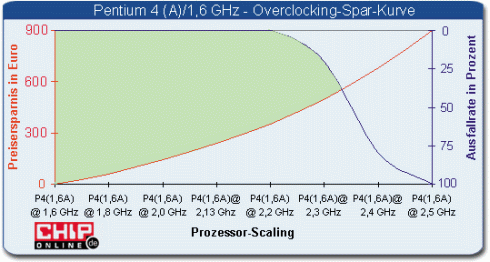
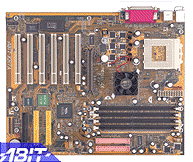 Abit heeft een