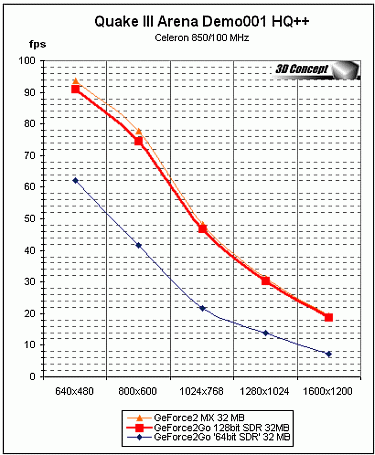
3D Concept heeft wat benchmarkscores online gemikt waarin ze de GeForce2 Go mobiele videochip simuleren. Een GeForce2 MX werd op 143/166MHz geklokt om zo de GF2 Go specificaties 'over te nemen'. Qua snelheid bleek dit maar weinig impact te hebben. Aangezien er ook een GeForce2 Go met een geheugen bandbreedte van slechts 64-bits zal komen werd ook dit nagebootst. De klokfrequentie werd hierbij simpelweg gehalveerd. Onderstaande grafiek laat mooi zien dat dit wel een groter effect had:
Ein ähnliches Bild zeigt sich bei Motocross Madness 2, einem 16bit - Benchmark. Die Unterschiede zum "echten" GeForce2 MX sind zwar messbar (ca. 2 fps), doch immer noch gering, solange dem Baustein ausreichend Speicherbandbreite zur Verfügung steht. Halbiert man die Speicherbandbreite, fällt bereits die 16bit-Leistung enorm ab.
Es bleibt zu hoffen, dass die Notebook-Hersteller diesen eigentlich leistungsfähigen Grafik-Baustein nicht nur des Namens wegen einsetzen, sondern auch dafür sorgen, dass die Praxisleistung nicht durch mikrige Speicherlösungen bis zur Unspielbarkeit eingebremmst wird.
 |
Onderandere Apple heeft al plannen om de chip in haar Powerbooks te stoppen, en ook Toshiba zal gebruik maken van de GeForce2 Go.

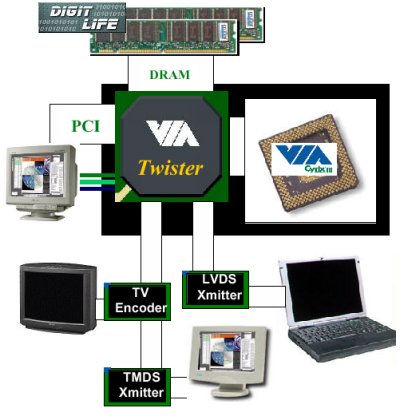
 My verdict? Teac has got an average 12x drive here. No it doesn't lead the pack like their old 6x and 8x CD-R's did. It merely runs with it. The CD-ROM performance of the drive is pretty good, exceeding the transfer rate and seek times of the Plextor in most cases. The 24x DAE performance is average. It reaches the top speed early on but its still no where near the 32x extraction rate of Plextor's 12/10/32 drives or the 40x extraction rate of the Yamaha. Don't get me wrong it does get the job done and does it better than 75% of the other drives out there.