 Versie 8.3 van de webbrowser Vivaldi is uitgekomen. Vivaldi is een webbrowser die wordt ontwikkeld door voormalige werknemers van Opera. Hij richt zich voornamelijk op powerusers en gebruikers van Opera vóór de overstap op Chromium, hoewel ook deze browser daarop is gebaseerd. Vivaldi heeft uitgebreide mogelijkheden, zoals mousegestures, stapelen van tabbladen, uitgebreide keyboardshortcuts en het maken van aantekeningen op webpagina's. De browser is gratis en wordt voor Windows, Linux, macOS en Android ontwikkeld, en tegenwoordig ook voor iOS. Hieronder is te vinden wat er in deze uitgave allemaal veranderd is.
Vivaldi 8.3 for Desktop: make bad ads sadWe aren’t part of the Big Tech oligarchy, and our business doesn’t depend on knowing all about you to predict when you are ready to buy a new toothbrush. While most browser companies turn your browsing into data for harvesting, and profiles to sell, Vivaldi gives you a European alternative that respects your privacy. With 8.3, we have given our Ad and Tracker Blocker a major upgrade so you can send the surveillance machinery home empty-handed.
We aren’t against respectful advertising. A contextual ad that matches the page you’re reading, and doesn’t follow you around afterwards, is a fair way for a site to pay its writers. The ads we object to are the ones that track and profile you. They follow you from site to site and remember things about you that you never chose to share. The built-in Ad and Tracker Blocker was created to make those bad ads sad. Rad!
How much advertising you want to block depends on YOU, who you are and what you’re reading. Some people want every tracker and ad long gone, and don’t mind if it causes a site to occasionally misbehave. Others want the sites they use to work perfectly every time. Some want a bit of both, depending on the site.
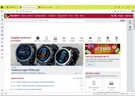
For this release we have given the Ad and Tracker Blocker an extensive rebuild to handle large filter lists more efficiently. We’ve also given it an updated design and new labels. The updated Ad and Tracker Blocker gives you four default levels of protection to choose from:
- Off: turns the built-in blocker off completely
- Light: blocks most known trackers and some ads
- Strong: blocks more trackers and ads, sites may break
- Aggressive: blocks almost all trackers and ads, sites may break
You can set your default level of blocking from settings or when onboarding to Vivaldi. The level you select from here will be applied to all sites, but in Vivaldi we always give you more. Ad blocking shouldn’t be all or nothing. In Vivaldi, you can decide how much of the web gets through, one site at a time, on every device you use. That’s the kind of control a browser should give the people who use it.
Levels really pay off when you set them per site. Put that dj-set on Youtube on full blast without ads breaking your beat with Aggressive. Keep your bank on Light so every form works as expected. Turn protection down on the small independent site you trust and whose ads you’re happy to see. To set a level for the site you’re on, click the shield icon in the Address Bar. Vivaldi remembers your choice, so each site loads the way you decided.
If you are particularly interested in the topic, we’ve also added the option to create “custom” levels. In these levels you configure everything yourself, giving you full control over which blocklists are used. You can add a custom block list either added from a remote URL or from their file manager.
The new Ad and Tracker Blocker is also available for Vivaldi on Android and iOS today, so your protection looks and works the same way on your laptop, your phone and your tablet.
Expanding our love for vertical tabsLong before vertical tabs were a talking point in our industry, they were introduced as an option in Vivaldi, and we have continued to improve the workflows for those who prefer to have their tabs on the side. With our 8.0 update this year, we introduced a redesign that really gave the vertical tabbers a sought-after update. With 8.3 we’re stepping it up with two new additions. If you like your Tab Bar stacked the same order as your sandwiches, listen up.
With Expand Tab Bar on Hover, you can keep the vertical Tab Bar slim, with just favicons showing, and give the page as much of your screen as possible until you actually need your tabs. When you’re looking for a tab, move your cursor over the Tab Bar and it smoothly expands to show full titles. Move away and it slides right back. The feature works when the Tab Bar sits on the left or right side of the window.
Pinned tabs on a vertical Tab Bar can now sit side by side in a compact grid at the top, neatly and all in order. Your mail, calendar and project tools stay one click away, and there’s far more room for everything else you have open. This is Vivaldi, so if you instead prefer the “old” way with each pinned tab taking a row, there is obviously a setting (Settings > Tabs > Tab Features > Pinned Tabs > Show Pinned Tabs at Full Width). If you’re yet to try vertical tabs, this is your sign. If you’re already in love with vertical tabs, you’re welcome.
What else is new in Vivaldi 8.3 Paste and Go, for a whole list of linksSomeone sends you a long list of links in an email or a chat, and you want to open every one of them. The desperate times of clicking them one by one are finally over! Copy the whole list, paste it in the Address Field, and Vivaldi opens each URL in its own tab. Research sources, someone’s wishlist, the reading list a colleague shared: all of them open simultaneously in each own tab, ready to stack, tile or work through one by one.
Copy Sanitized LinkLinks often carry tracking parameters that tell a site who shared them and where they came from. Copy Sanitized Link strips those out before the link reaches your clipboard, so the person you send it to gets the page and nothing else. It’s an easy habit that keeps a bit more of your browsing to yourself.
Faster Reader ModeReader Mode has gotten some tender love and caring for 8.3. It now opens faster and scrolls more smoothly, so you can switch from a busy page to a clean, readable article in a moment and settle in.
Support for Tab Groups APIVivaldi now supports Chrome’s Tab Groups API for extensions, so extensions built around tab groups can now work in Vivaldi.



 Misschien is dan uBlock Origin niet meer nodig
