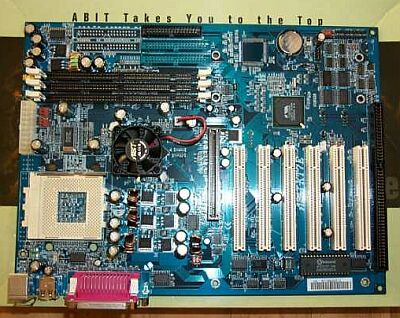
Overclockers Online brengt ons een review van de Abit KT7E. Dit bordje is gebaseerd op de KT133E chipset maar gebruikt verder dezelfde layout als de bekende Abit KT133A plank. Zoals je weet is het enige verschil tussen beide VIA chipsets de 133MHz bussnelheid, die de E-versie officieel niet ondersteunt. In de praktijk bleek er echter geen enkel probleem te zijn met een FSB-snelheid van zelfs 146MHz.
Helaas zal de KT7E KT133E niet verschijnen met een onboard RAID, maar mocht je daar toch geen behoefte aan hebben is er geen reden om voor de duurdere KT7A KT133A versie te gaan:
Because the Abit KT7E is the only KT133E chipset based mainboard on the at the moment, we can't compare its performance to a KT133E based board from another manufacturer YET! As our review almost reaches its end, a couple of important questions remain ... 1) Why is the KT133E cheaper than the KT133A? 2) Why is Abit the only manufacturer (at this moment) that could/would make a KT133E based motherboard? 3) Why should you even consider buying a KT7A mobo if the KT7E is cheaper and performs this good? (unless you want onboard RAID and a 150MHz FSB of course)
In other words, Abit has again done a mighty fine job with its KT7E. They've kept the same good old KT7 PCB design and they added the KT133E chipset to it. This combination makes the KT7E a real champion ... it's going to be cheaper than the KT7A, has the same power, stability and tweaking options and looks damn sexy with the blue PCB. What more could we ask for?
Alright folks, I have one small sentence left for you about this ABIT KT7E mobo : "Low end board ... yeah right!"
 As you can see the Corsair PC2400 clearly lives up to expectations. It is able to reach the highest FSB at CAS2 and ties with the Crucial for the highest FSB at CAS3. I will tell you that 163Mhz CAS2 (333Mhz) is faster than 175Mhz (350Mhz) CAS3 especailly when you consider that the Corsair DDR made it to 163MHz at CAS2 with 4-way interleaving and the "DRAM performance mode" topped out. It is interesting to note that the Crucial PC1600 does just as well as the Crucial PC2100 and better than most of the other modules. However, both sticks do cost within $1 of eachother so there isn't a huge savings if you go with the PC1600. Both the Crucial sticks were able to hit 155Mhz CAS2 and 175Mhz CAS3. So the real question comes down to price and whether or not you want the absolute best overclocker.