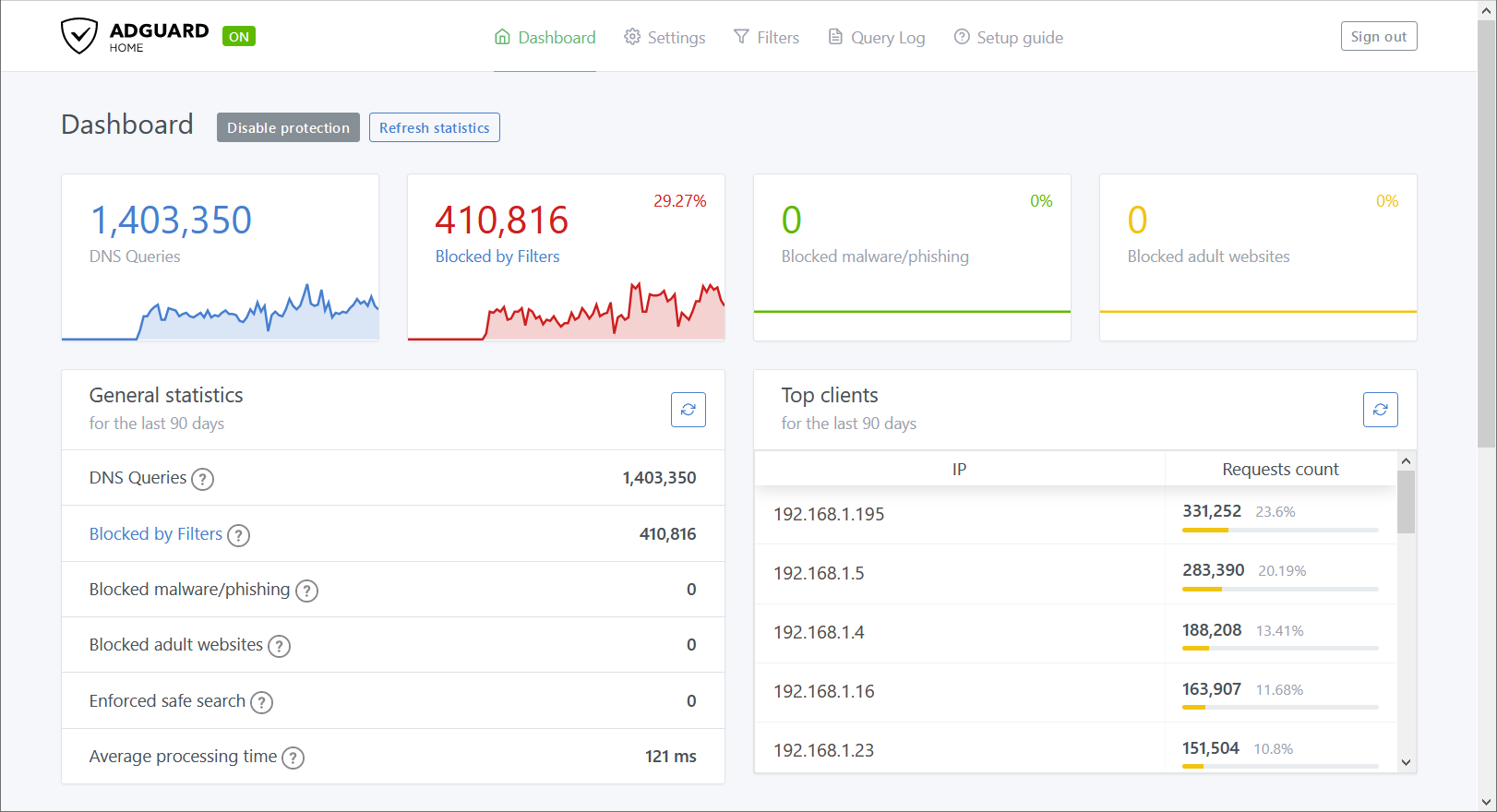
 AdGuard Home versie 0.107.75 is uitgekomen. Met deze software kan er thuis een DNS-server worden opgezet om zo onder meer advertenties en malware te blokkeren op het hele netwerk, waardoor dat niet langer op elk individueel apparaat nodig is. Het is daarmee dus vergelijkbaar met Pi-hole. AdGuard Home werkt op een machine met Windows, macOS, Linux of FreeBSD, is ook in staat om tegen phishing te beschermen en heeft parental control. Op ons eigen forum kan over het programma worden gediscussieerd. In deze uitgave zijn de volgende veranderingen en verbeteringen aangebracht:
AdGuard Home 0.107.75This update gives AdGuard Home a solid security upgrade — think of it as tightening the locks and double-checking the doors. We've fixed a critical vulnerability affecting DNS-over-QUIC and DNS-over-HTTPS that could put your DNS privacy at risk. The gap is now closed, and your encrypted traffic is back to traveling through a properly armored tunnel. We also updated Go to the latest version, sweeping out known vulnerabilities in its libraries.
SecurityChanged
- Go version has been updated to prevent the possibility of exploiting the Go vulnerabilities fixed in 1.26.3.
- IDs of requests received over DoH and DoQ and forwarded to plain-DNS upstreams are now set to non-zero values to improve security. This is GHSA-xgx4-4h9w-53pv.
Fixed
- Frontend API requests no longer depend on axios.
- Dashboard charts use Recharts instead of Nivo.
enable_dnssecindnsconfiguration now defines whether the proxy should set the DO flag in the upstream requests, the default istrue(#7046).
- Statistics database deadlock (#8359).
- Translated labels on the DNS settings pages not updating after changing the UI language.
- Dashboard charts now correctly display lower query counts (#6823).
- Redundant validation warnings about DHCP when it's disabled (#8348).
- Safe Browsing and Parental Control labels on the General Settings page not updating after changing the UI language.

:strip_exif()/i/2003594310.png?f=thumbmedium)
:strip_icc():strip_exif()/u/797597/crop5d62c8df1cd63_cropped.jpeg?f=community)

:strip_icc():strip_exif()/u/126276/crop66f3fa6d57347_cropped.jpg?f=community)
:strip_icc():strip_exif()/u/2189/baby.jpg?f=community)
:strip_exif()/u/476997/ceetava60x60.gif?f=community)
/u/433/crop6746d51e1326a_cropped.png?f=community)
/u/526195/crop5fc8950f9e4ac_cropped.png?f=community)
:strip_icc():strip_exif()/u/291199/crop5e819fd8996da_cropped.jpeg?f=community)

:strip_icc():strip_exif()/u/480597/crop68b03d247d9ac_cropped.jpg?f=community)
:strip_icc():strip_exif()/u/45000/zardoz3-edit.jpg?f=community)
/u/16711/crop60a011a7ee516_cropped.png?f=community)